Custom Lifted Truck Solutions for Work, Towing, and Weekend Use
Custom Lifted Truck Solutions for Work, Towing, and Weekend Use
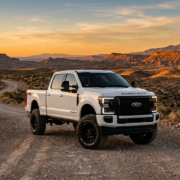
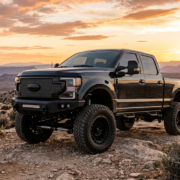
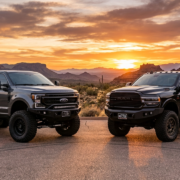
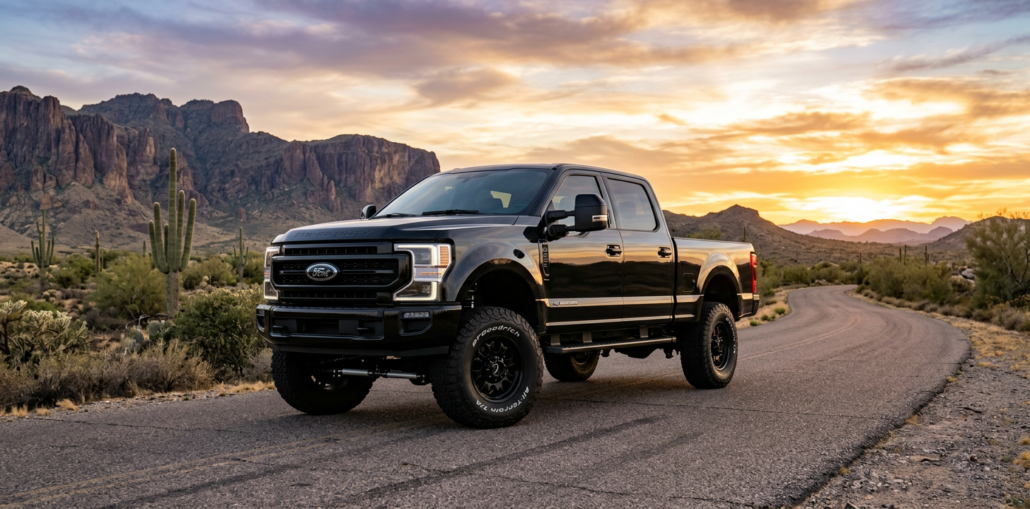
A custom lifted truck should do more than look impressive in a parking lot. It should fit the way you actually use it, whether that means hauling equipment across Phoenix, towing a fifth wheel out of Arizona, navigating a rough trail, or commuting comfortably during the week.
The best custom lifted truck solutions begin with the truck’s job, not the size of the lift kit. We help buyers think through suspension height, tire load rating, wheel fitment, gearing, towing needs, and budget before choosing a truck or build direction. That approach helps prevent a great-looking truck from becoming a poor fit for daily driving, payload, or trailer duty.
Start With the Job Your Truck Has to Do
A successful build matches the platform and modifications to your heaviest, most frequent use. A truck that spends most of its time towing should be built differently than one that primarily runs trails or carries tools between job sites.
Here is a fast way to narrow the right setup:
| Primary Use | Smart Starting Point | Lift Approach | Tire Priority |
|---|---|---|---|
| Daily driving | Half-ton or 2500 gas truck | Leveling kit or mild lift | Quiet all-terrain |
| Travel trailer towing | 2500 or 3500 diesel | Mild, towing-focused lift | Load-rated all-terrain |
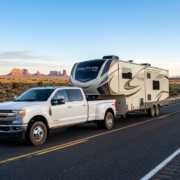
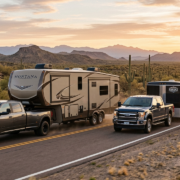
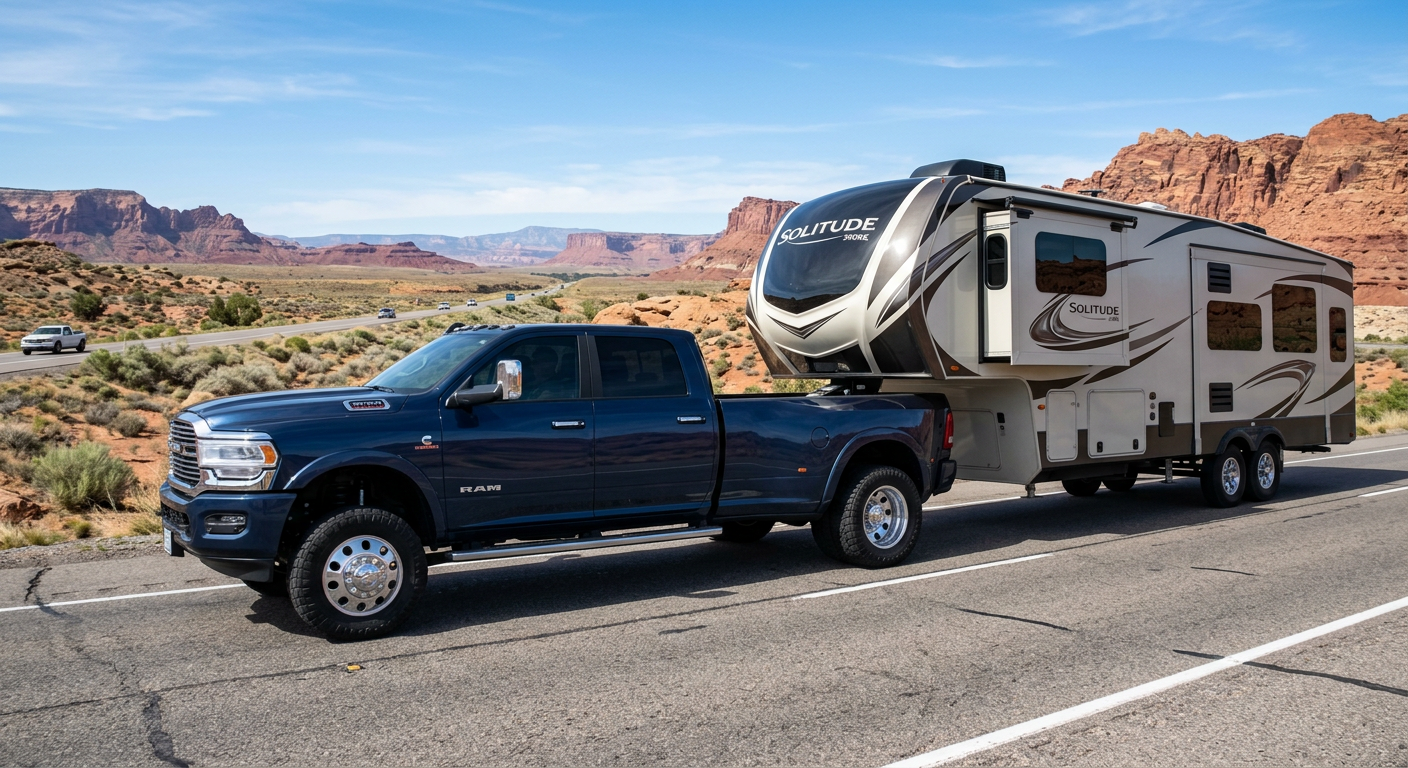
| Fifth-wheel towing | 3500 or F-350, often dually | Conservative suspension lift | High-capacity tires |
| Jobsite work | Heavy-duty gas or diesel | Functional clearance | Durable all-terrain |
| Off-road recreation | 4×4 with suitable axle and suspension | Moderate lift with travel | All-terrain or mud-terrain |
For many buyers, a two- to four-inch suspension lift delivers the best balance of clearance, stance, and day-to-day usability. Taller builds can make sense, but they deserve more planning around steering geometry, braking feel, ride quality, step height, tire weight, and trailer connection height.
If your plans include a loaded trailer, start by reviewing factory tow ratings, payload, axle ratings, hitch equipment, and the trailer’s loaded weight. A lift kit does not increase the truck’s original manufacturer ratings. That point matters most with heavy fifth wheels, equipment trailers, and truck campers.
Choose the Right Custom Lifted Truck Platform
The strongest build begins with a truck that already has the capability you need. We recommend choosing cab size, bed length, fuel type, drivetrain, and axle capacity before selecting wheels, tires, and suspension components.
Ford Super Duty for Heavy Towing and Big Builds
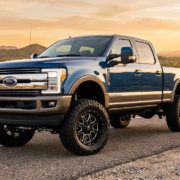
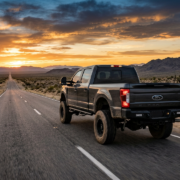
Ford F-250, F-350, and F-450 Super Duty trucks are strong candidates for buyers who need serious towing capability, spacious cabins, and room for larger wheel-and-tire combinations. An F-350 is often the better starting point when your regular use includes a substantial fifth wheel, bed cargo, or a heavy trailer.
A Power Stroke diesel Super Duty can be a sensible choice for frequent long-distance towing. For a lighter-duty daily driver, a gas-powered F-250 may offer the simpler ownership profile some buyers prefer. The right answer depends on how often you tow, how far you travel, and how much weight you carry.
Ram Heavy Duty for Cummins Power and Towing Stability
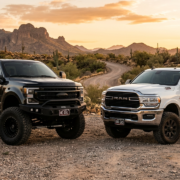
Ram 2500 and Ram 3500 trucks appeal to buyers who want Cummins diesel torque, available coil-spring rear suspension on certain 2500 models, and serious heavy-duty capability. A Ram 3500 dually makes particular sense for customers pulling a large fifth wheel, horse trailer, or commercial trailer on a regular basis.
We generally recommend keeping a tow-focused Ram build practical. A measured lift, load-rated tires, suitable wheel offset, and an easy-to-use hitch setup usually deliver a better ownership experience than an extreme build that complicates trailer clearance and entry height.
Chevrolet Silverado HD and GMC Sierra HD for Versatility
Chevrolet Silverado 2500HD and 3500HD, along with GMC Sierra 2500HD and 3500HD models, give buyers strong Duramax diesel options and a broad range of work-ready configurations. These trucks can work well as lifted daily drivers, jobsite pickups, and tow rigs when the suspension and tire package suit the intended load.
A heavy-duty GM truck with a modest lift can deliver the muscular appearance buyers want without sacrificing the practical qualities that make it useful. Bed access, trailer hookup, turning clearance, and tire load capacity deserve just as much attention as wheel finish and lift height.
Build Around Suspension, Tires, and Geometry
Suspension, tires, and steering geometry must work as one system. The most dependable custom lifted truck solutions use compatible parts and leave room for alignment, full steering travel, and normal suspension movement.
Suspension Lift, Leveling Kit, or Factory-Style Stance
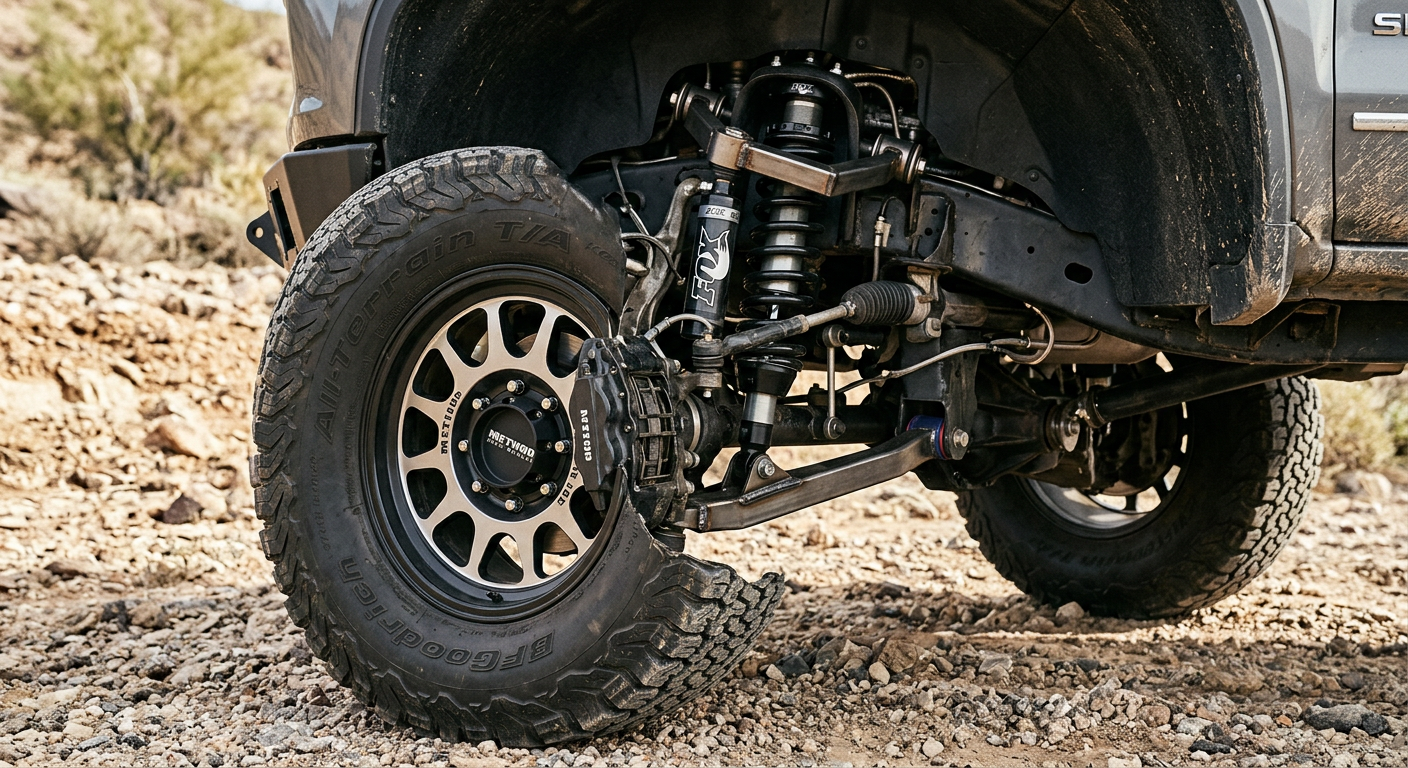
A leveling kit is often enough for buyers who want to reduce factory rake and fit a slightly larger tire while retaining familiar road manners. A suspension lift can create more room for larger tires and greater ground clearance, but it requires closer attention to shocks, control arms, track bars, driveline angles, and alignment settings.
We recommend asking for a clear list of installed components on any pre-owned lifted truck. Look for details on lift brand, shocks, wheel size, tire size, alignment work, and any supporting upgrades. Documentation can make it easier to understand the truck’s build and plan future maintenance.
Tire Load Rating Matters More Than Aggressive Tread
A large tire may look right, but the truck still needs tires rated for its real-world load. This is especially important for diesel trucks, heavy-duty pickups, dually trucks, and any build used for towing.
The National Highway Traffic Safety Administration reports that 511 people died in tire-related crashes in 2024. It also advises truck owners to use the tire size listed on the vehicle information label or another manufacturer-recommended size, and to follow proper inflation guidance. For lifted trucks, we treat tire condition, load rating, pressure, balance, and alignment as core buying considerations, not afterthoughts.
All-terrain tires are often the best middle ground for Arizona drivers who combine paved-road travel with dirt roads, campgrounds, and occasional trail use. Mud-terrain tires may be a stronger fit for dedicated off-road use, but they can bring more road noise and different wear characteristics.
Wheels and Offset Should Support the Build
Wheel offset affects stance, steering clearance, and how far the tire sits beyond the fender. Excessive poke can look dramatic, but it can also increase the chance of rubbing, throw more debris down the truck’s side, and place additional stress on components.
We favor wheel and tire fitment that allows full steering movement and avoids rubbing under suspension compression. A clean, usable build is usually more valuable than one that only works well when parked.
A Progressive Build Plan Protects Your Budget
The smartest custom truck plan is often phased rather than rushed. We recommend securing the right truck first, then adding upgrades in an order that protects capability and keeps the build focused on how you drive.
A practical sequence looks like this:
- Choose the right base truck. Confirm cab, bed, engine, drivetrain, tow needs, and payload requirements.
- Set the suspension height. Decide on a leveling kit, mild lift, or more capable off-road suspension before buying wheels.
- Select correctly rated tires. Match tire size and load range to the truck’s intended cargo and trailer duty.
- Finish the functional upgrades. Consider steps, lighting, bed protection, towing accessories, or a tonneau cover based on your routine.
- Add appearance details last. Wheel finish, grille accessories, and exterior accents should complement a mechanically sound setup.
This progressive approach gives buyers a better chance to drive the truck, learn what it needs, and avoid paying twice for parts that no longer fit the plan. It also works well for buyers who want to finance the truck first and complete selected upgrades over time.
What to Check Before Buying a Pre-Owned Lifted Truck
A pre-owned custom truck can offer significant value because the suspension, wheels, tires, and accessories may already be installed. Still, every buyer should inspect the build with the same care they would use for engine, transmission, and body condition.
Use This Lifted Truck Inspection List
- Ask what lift components are installed and whether records are available.
- Inspect tires for uneven wear, sidewall damage, age, and load rating.
- Drive the truck at city and highway speeds to notice pulling, vibration, wandering, or steering play.
- Check for rubbing at full steering lock and look underneath for fluid leaks or damaged components.
- Confirm that the truck’s hitch, trailer brake controller, mirrors, and trailer connections match your towing needs.
- Review the vehicle history, service records, and any aftermarket equipment included with the sale.
Regular tire care is part of protecting a lifted truck investment. NHTSA notes that, where the manufacturer recommends it, tire rotation may be needed every 5,000 to 8,000 miles, with earlier attention if uneven wear appears. Proper inflation, balancing, and alignment become even more important as tire size and vehicle weight increase.
Find a Build That Fits, or Let Us Help Locate One
Buying a custom lifted truck should feel specific, not generic. At Unique Trucks, we help customers compare premium pre-owned Ford Super Duty, Ram Heavy Duty, Chevrolet Silverado HD, and GMC Sierra HD trucks around the work, towing, recreation, and daily-driving needs that matter most.
You can view current truck inventory, compare available heavy-duty diesel trucks, or use our truck sourcing service if you have a specific year, cab, engine, lift height, or color in mind. Buyers outside Arizona can also review nationwide truck shipping options before making a decision.
If financing is part of the plan, we encourage you to get pre-qualified for truck financing and understand your buying range before narrowing the build. Call (480) 210-2660 to talk through the truck you have in mind.
Common Questions About Custom Lifted Trucks
What lift height is best for a daily-driven truck?
For many daily-driven trucks, a leveling kit or a moderate two- to four-inch lift provides the best blend of looks, clearance, and road comfort. The ideal choice still depends on tire size, suspension design, garage clearance, towing habits, and how often you drive on pavement.
Can a lifted truck still tow a fifth wheel safely?
Yes, but the build must preserve practical trailer clearance and hitch setup. A conservative lift, correctly rated tires, proper hitch equipment, and an evaluation of loaded trailer height are usually more important than pursuing maximum lift height.
Does lifting a truck increase payload or towing capacity?
No. Suspension modifications do not raise the manufacturer’s original payload, axle, or tow ratings. Always base your hauling and towing decisions on the ratings shown on the truck’s certification label and the owner’s manual.
Are diesel trucks better for custom lifted towing builds?
Diesel trucks are often a strong fit for buyers who tow heavy loads frequently or travel long distances with a trailer because of their torque and heavy-duty configurations. Gas trucks can still be excellent choices for lighter towing, lower annual mileage, or buyers who prefer a different ownership cost profile.
Should I buy a truck that is already lifted or build one after purchase?
An already lifted truck can be a strong value when its components, tires, condition, and build quality match your needs. Starting with a stock or near-stock truck may be better if you have a very specific vision for suspension height, wheel fitment, towing equipment, or off-road hardware.
Can I finance a custom lifted truck?
Many buyers finance lifted and diesel trucks, although approval terms vary by vehicle, lender, credit profile, and down payment. Completing a pre-qualification step early can help you shop with a more realistic budget and move quickly when the right truck arrives.
Build for the Miles You Actually Drive
The right lifted truck is one you enjoy driving after the first week, not just one that photographs well on delivery day. Choose a platform with the capacity you need, keep suspension and tire choices compatible with your real use, and prioritize quality fitment over extreme dimensions.
For buyers in Scottsdale, Phoenix, across Arizona, and nationwide, a well-planned custom truck can be a capable work partner, comfortable tow rig, and weekend escape vehicle in one package. Start with the job, build around safety and utility, and the style will follow naturally.
About Unique Trucks
Unique Trucks is a family-owned dealership with over 20 years of experience serving truck buyers from Scottsdale, Phoenix, throughout Arizona, and across the United States. The dealership specializes in quality pre-owned lifted trucks, diesel trucks, work trucks, heavy-duty pickups, custom builds, and used SUVs.
The Unique Trucks Team offers competitive financing, trade-ins, vehicle sourcing, and nationwide shipping to help customers find the right truck with a no-pressure buying experience.
Browse the current inventory, get pre-qualified, or call (480) 210-2660 to speak with the Unique Trucks Team today.