
How to Calculate Payload Capacity for Your Pickup Truck Safely
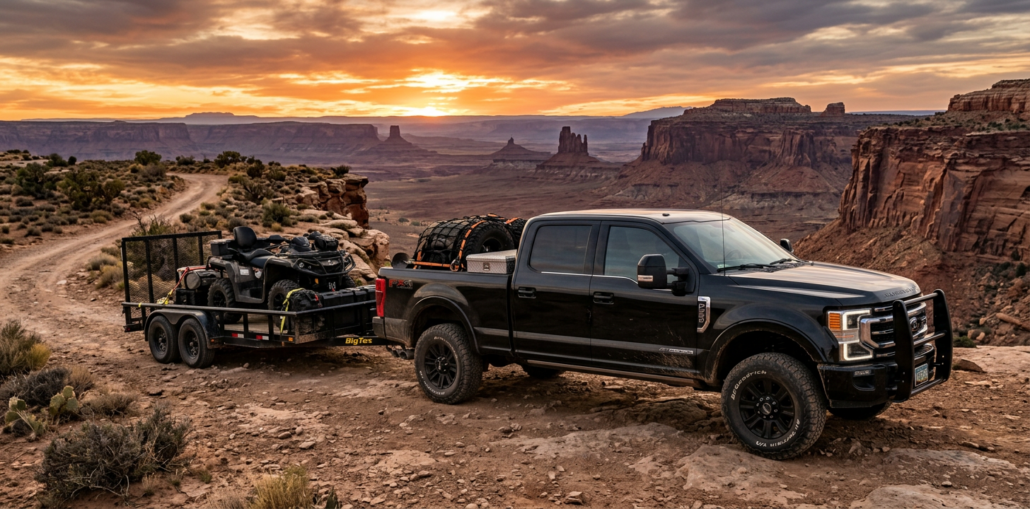
A truck can have enormous towing numbers and still be the wrong choice for the job. The catch is often the weight sitting on the truck itself, including passengers, tools, cargo, aftermarket accessories, and the trailer weight pressing down on the hitch. That is why knowing how to calculate payload capacity matters before you buy, load up, or hook up a trailer.
We see this all the time with heavy-duty pickups. A buyer compares an F-250, Silverado 2500HD, Sierra 2500HD, or Ram 2500 by maximum tow rating, then discovers that a fifth-wheel pin weight, a packed cab, and a bed full of gear use payload faster than expected. The good news is that the math is simple once you know which numbers to trust.
Payload Capacity at a Glance
| Term | What It Means | Why It Matters |
|---|---|---|
| Payload | Weight carried by the truck | Includes people, gear, and hitch weight |
| GVWR | Maximum loaded truck weight | Your total loaded truck cannot exceed it |
| Curb weight | Truck weight with fuel and standard equipment | Used for a basic factory calculation |
| Available payload | Unused capacity today | Best found with a certified scale |
| GAWR | Front or rear axle weight limit | Helps prevent axle and tire overload |
The basic formula is:
Payload capacity = GVWR minus curb weight
For a real-world load, use this more useful version:
Available payload = GVWR minus the truck's actual scale weight
Ford explains that payload is the combined weight of cargo and occupants, and that factory payload is found on the Tire and Loading Information label in the driver-door area. Ford's payload guidance also notes that added equipment and trailer tongue or pin weight reduce what remains available. (ford.com)
Find the Right Payload Number First
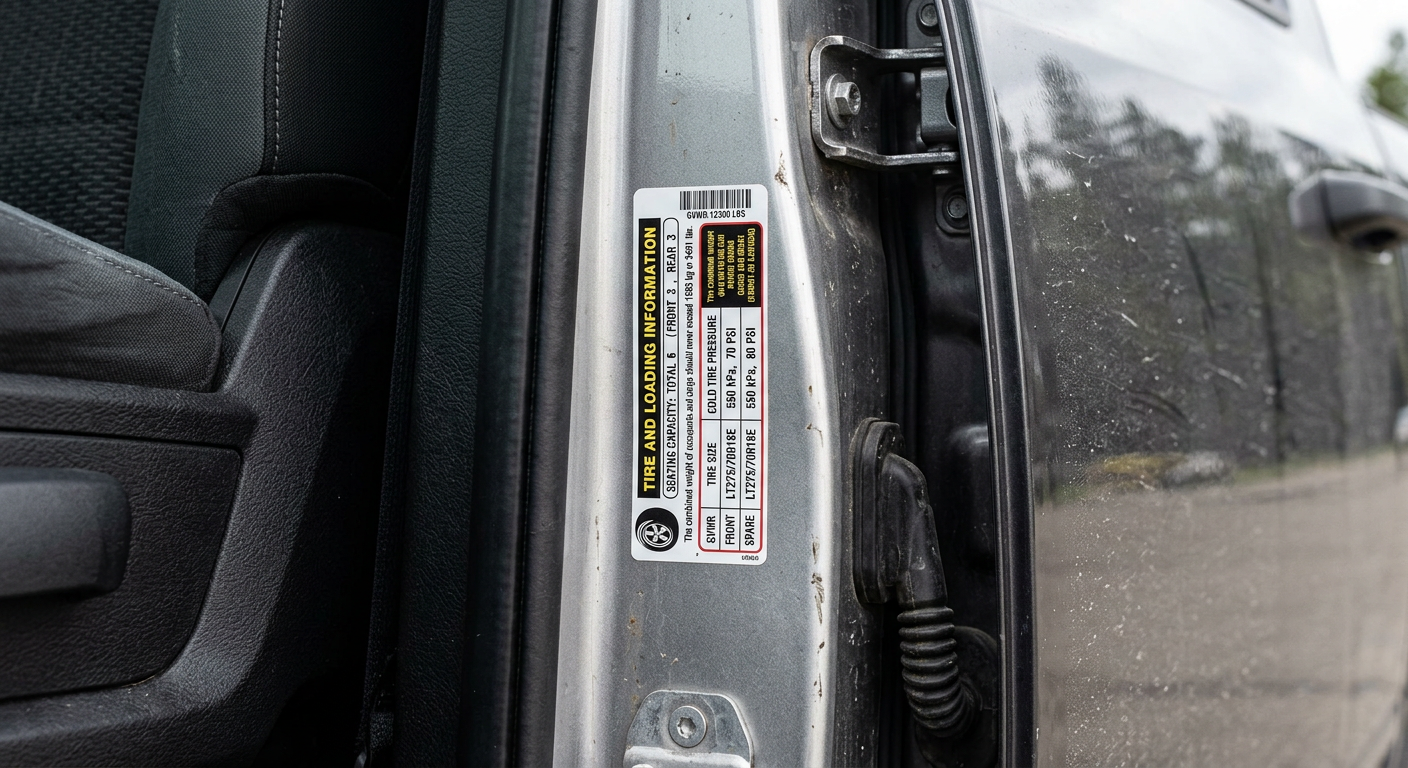
The most accurate starting point is not a brochure, online listing, or a maximum rating for a different trim. It is the yellow-and-white Tire and Loading Information label attached to the driver-side door jamb or door edge on the specific truck you are evaluating.
Look for language similar to: “The combined weight of occupants and cargo should never exceed” followed by a pound amount. That number is the factory payload limit for that exact truck as it left the assembly plant, accounting for its cab, bed length, drivetrain, trim, and factory-installed options.
The National Highway Traffic Safety Administration directs drivers to the Tire and Loading Information label for vehicle load details and correct tire information. It is a practical reminder that the label on the truck matters more than a generic online specification. (nhtsa.gov)
Why published payload ratings can mislead buyers
A manufacturer may advertise the highest available payload for a particular model family, but that number often belongs to a lighter configuration. A crew cab four-wheel-drive diesel with luxury equipment, a panoramic roof, larger wheels, or a long list of options can have a substantially different payload figure than a regular-cab work truck.
That does not make the equipped truck less capable. It simply means you should match the actual door-label number to your real workload. When you shop pre-owned trucks, ask for a clear photo of the driver-door labels before making a long trip or arranging nationwide delivery.
Count Everything That Rides on the Truck
Payload is not limited to gravel, lumber, or a loaded toolbox. Anything that adds weight to the truck counts against the limit.
What counts as payload
Include all of the following in your calculation:
- Driver and every passenger
- Tools, jobsite supplies, coolers, luggage, and recovery gear
- Bed caps, tonneau covers, bed slides, toolboxes, and auxiliary fuel tanks
- Winches, heavy bumpers, lighting, larger wheels, and other accessories
- A truck camper and all gear carried inside it
- Trailer tongue weight from a bumper-pull trailer
- Fifth-wheel or gooseneck pin weight
Here is the thing, a trailer can be within its towing rating and still overload the truck's payload. Trailer tongue weight and fifth-wheel pin weight transfer directly onto the pickup, so they belong in the same calculation as your passengers and cargo.
A practical payload example
Assume the door label on a Ram 2500 shows a payload limit of 1,980 pounds. You plan to take two adults, two kids, a toolbox, a bed cover, recovery gear, and a trailer with 640 pounds of tongue weight.
| Item | Estimated Weight |
|---|---|
| Four occupants | 630 pounds |
| Toolbox and tools | 145 pounds |
| Bed cover | 70 pounds |
| Recovery gear | 60 pounds |
| Trailer tongue weight | 640 pounds |
| Total payload used | 1,545 pounds |
| Remaining capacity | 435 pounds |
In this example, the truck stays under its factory payload figure, but the remaining margin is not huge. Add a generator, camping gear, a larger cooler, or heavier hitch equipment, and you can quickly use the rest.
Use a Public Scale for the Real Answer
A scale ticket is the best way to remove guesswork, especially for lifted trucks, diesel pickups, heavily equipped work trucks, and any truck towing a fifth wheel. Drive onto a certified truck scale with the fuel level, accessories, and gear you normally carry, then subtract the actual truck weight from the GVWR listed on the certification label.
For example, if your truck has a 10,000-pound GVWR and weighs 8,150 pounds ready for a trip, you have 1,850 pounds of available payload. That available amount must cover people, cargo, and hitch weight not already on the truck.
We also recommend weighing axles separately when towing. You may be under total GVWR while putting too much weight on the rear axle, rear tires, or wheels. The axle ratings on the door certification label, plus the tire and wheel ratings, still apply.
Do Not Confuse Payload With Towing Capacity
Towing capacity is the maximum trailer weight a truck can pull under specified conditions. Payload capacity is the weight the truck can carry on its own tires and suspension. They are connected, but they are not interchangeable.
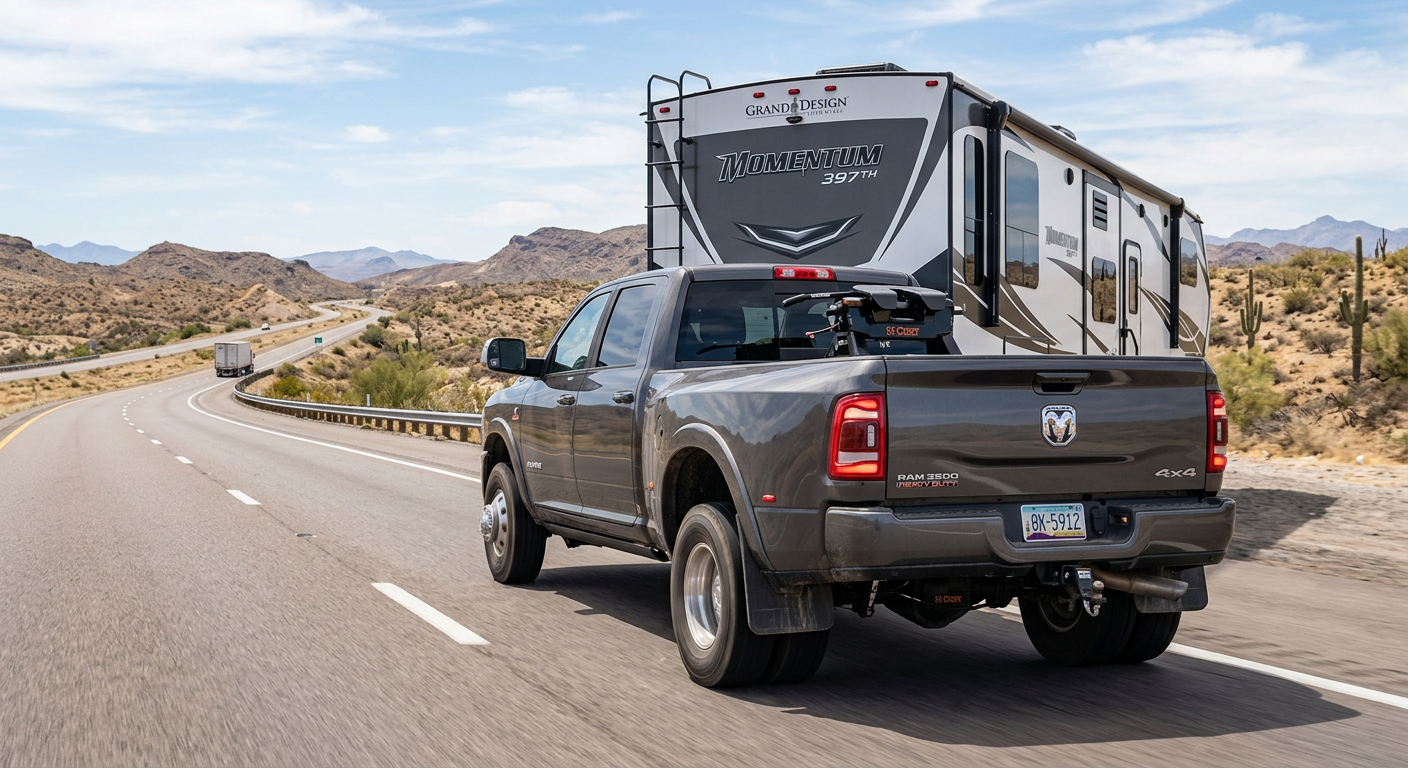
A travel trailer usually adds a portion of its loaded weight to the hitch. A fifth wheel can add much more to the bed through pin weight. That is why buyers moving from a bumper-pull trailer to a fifth wheel often benefit from comparing a three-quarter-ton pickup with a one-ton truck, including single-rear-wheel and dually configurations.
For serious towing, it is smart to compare the payload label before choosing between diesel trucks and gas-powered heavy-duty pickups. A diesel engine provides strong low-end torque, but its additional weight can reduce payload compared with a similar gas configuration. The right answer depends on your trailer, cargo, frequency of use, and total loaded weight.
How Modifications Change Payload Capacity
Lift kits, larger tires, wheels, bumpers, winches, and bed accessories can be useful upgrades, but they do not raise the manufacturer's GVWR. In most cases, added equipment reduces your available payload pound for pound.
For example, adding a 120-pound front bumper and winch assembly means 120 fewer pounds of remaining payload. Larger aftermarket wheels and tires may also affect unsprung weight, tire ratings, handling, and axle loading. A professionally built lifted truck can still be an excellent choice, but you should calculate its real ready-to-drive scale weight rather than relying only on the original sticker.
This is especially important if you are comparing lifted trucks for off-road trips, boat towing, or work use. Make a list of the accessories already installed, then include their actual weight in your planning.
Choose the Right Truck for Your Payload Needs
The best truck is not always the one with the largest headline rating. It is the truck that leaves enough room for the way you will actually use it.
Light-duty and half-ton pickups
A half-ton truck can be a great fit for weekend projects, smaller travel trailers, light equipment, and daily driving. But a crew cab, four-wheel drive, upscale interior, and aftermarket additions can reduce available capacity, so check the door label carefully.
Three-quarter-ton heavy-duty pickups
Ford F-250, Chevrolet Silverado 2500HD, GMC Sierra 2500HD, and Ram 2500 trucks are popular choices for heavier trailers, work gear, and diesel ownership. They can offer impressive capability, but payload still varies widely by configuration.
One-ton and dually trucks
F-350, Silverado 3500HD, Sierra 3500HD, and Ram 3500 models are often a better match for large fifth wheels, truck campers, commercial equipment, and consistent heavy loads. A dually adds rear-tire stability and is often worth considering when rear-axle demands are high.
If you know the weights but have not found the right configuration, use the Vehicle Finder to describe the trailer, payload target, preferred brand, and must-have features. It is a more efficient approach than falling in love with a truck before confirming that it works for your load.
Frequently Asked Questions
Is payload capacity the same as cargo capacity?
Not exactly. Payload includes cargo, passengers, accessories, and trailer tongue or pin weight. Cargo capacity usually refers only to the items you place in the truck, so it is only one part of payload.
Where can we find a truck's payload capacity?
Check the Tire and Loading Information label on the driver-side door jamb or door edge. The line stating the maximum combined weight of occupants and cargo is the factory payload limit for that specific truck.
Does a trailer count against payload capacity?
The entire trailer does not count as payload, but the weight pressing down on the hitch does. That means bumper-pull tongue weight and fifth-wheel or gooseneck pin weight both reduce available payload.
Does a lift kit increase truck payload?
No. A lift kit does not increase the manufacturer's GVWR or factory payload rating. Added lift components, larger tires, wheels, bumpers, and accessories may reduce the payload you have left.
Can we calculate payload using GVWR and curb weight?
Yes. Subtract curb weight from GVWR for a basic factory calculation. For the most useful real-world number, subtract the truck's actual scale weight from GVWR after accounting for installed accessories and normal fuel level.
Why is a diesel truck's payload sometimes lower than a gas truck's?
Diesel engines and related components can weigh more than comparable gas powertrains. That added truck weight may reduce the difference between GVWR and curb weight, leaving less payload even when towing capability is strong.
Find a Truck That Works Before You Buy
Before you commit to a truck, bring us your real numbers: passenger weight, tool weight, trailer type, loaded trailer estimate, and any planned accessories. The Unique Trucks Team can help you compare configurations and narrow the field to pickups that make sense for work, towing, recreation, or daily driving.
Browse the current inventory, explore work trucks, or get pre-qualified before your next purchase. We help truck buyers in Scottsdale, Phoenix, across Arizona, and nationwide choose capable pre-owned pickups without the pressure.
The Bottom Line on Payload Math
Learning how to calculate payload capacity is one of the easiest ways to buy with confidence. Start with the specific truck's door label, account for every pound that rides on the truck, include trailer hitch weight, and use a certified scale when the load is serious.
That process keeps the comparison honest. Whether you need a comfortable daily driver, a diesel tow rig, a lifted weekend truck, or a dually for a fifth wheel, the right payload margin makes the truck safer, more useful, and easier to live with.
About Unique Trucks
Unique Trucks is a family-owned dealership with over 20 years of experience serving truck buyers from Scottsdale, Phoenix, throughout Arizona, and across the United States. The dealership specializes in quality pre-owned lifted trucks, diesel trucks, work trucks, heavy-duty pickups, custom builds, and used SUVs.
The Unique Trucks Team offers competitive financing, trade-ins, vehicle sourcing, and nationwide shipping to help customers find the right truck with a no-pressure buying experience.
Browse the current inventory, get pre-qualified, or call (480) 210-2660 to speak with the Unique Trucks Team today.

