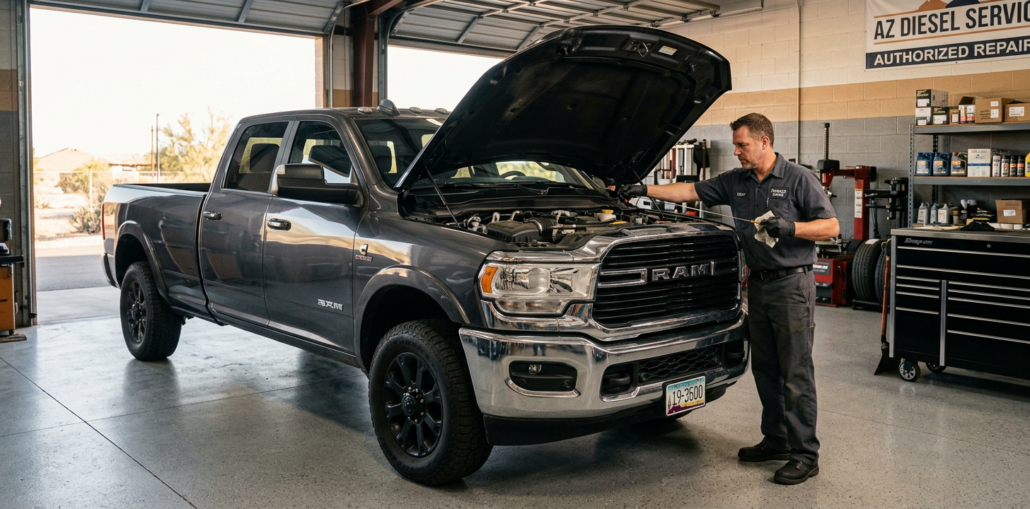
A diesel pickup earns its reputation through hard work, not through skipped service. The most important common diesel truck maintenance tips are simple: protect the fuel system, use the exact fluids your truck requires, watch warning messages early, and keep complete service records.
That advice applies whether we own a Power Stroke Ford Super Duty, Cummins-powered Ram, Duramax Chevrolet Silverado HD, or GMC Sierra HD. The details and intervals vary by model year, engine, towing load, climate, and modifications, so the owner’s manual is always the final authority. Still, a disciplined routine helps us spot small concerns before they interfere with a workday, a family trip, or a loaded trailer.
The Diesel Maintenance Priorities That Matter Most
A healthy diesel truck is built on clean fuel, correct oil, effective cooling, and working emissions equipment. Start with these areas before adding extra maintenance items that may not fit your truck’s actual use.
| Maintenance area | What to monitor | Why it matters | Smart owner habit |
|---|---|---|---|
| Fuel system | Filter interval, water contamination | Protects injectors and pumps | Keep fuel-service receipts |
| Engine oil | Correct specification and level | Supports engine and turbo protection | Follow the manual’s interval |
| Cooling system | Coolant, leaks, airflow | Helps manage towing heat | Inspect before long hauls |
| DEF and emissions | Fluid level, warning lights, fault codes | Avoids power-limiting issues | Address alerts promptly |
| Driveline | Transmission, differential, U-joints | Supports towing and larger tires | Service for actual workload |
Keep Fuel Clean and Change Filters on Time
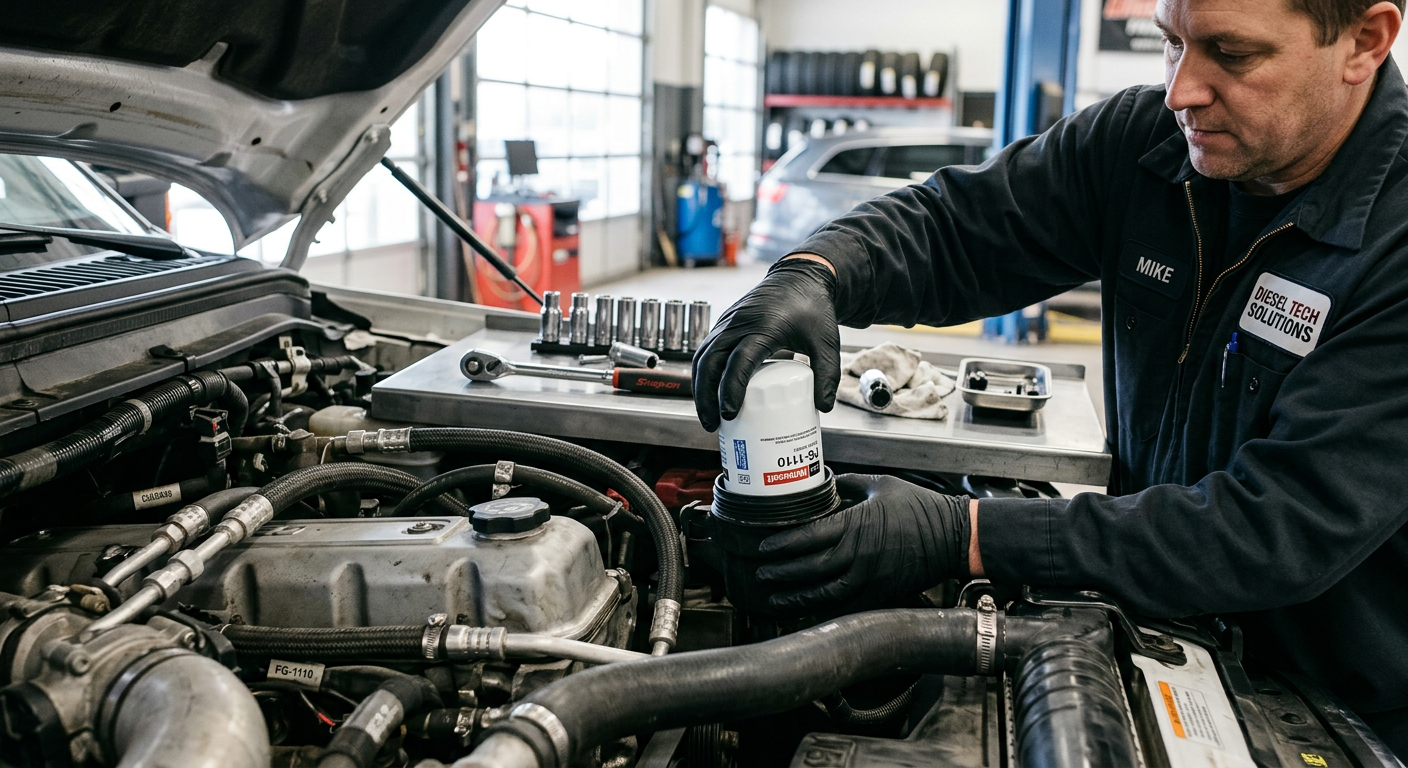
Fuel filters are not a maintenance item to delay. Modern diesel injection systems work at very high pressure, and water or debris in the fuel can create expensive problems in injectors, pumps, and related components.
We recommend following the manufacturer’s stated filter interval, then taking a more conservative approach if the truck spends time at dusty jobsites, sits for extended periods, tows frequently, or fuels in unfamiliar locations. If we buy a used diesel with unclear fuel-filter history, replacing the filters is often sensible baseline maintenance.
Pay attention to hard starts, a rough idle, hesitation under acceleration, reduced power, or fuel-related messages. None of those automatically means a major repair, but each one warrants a qualified diagnosis before we place the truck under a heavy load.
Use the Exact Oil Specification for Your Engine
Diesel oil service is about more than picking a viscosity from a store shelf. The engine, model year, emissions system, climate, towing demands, and manufacturer requirements determine which oil and filter belong in the truck.
Arizona heat adds another reason to stay organized. Long grades, high ambient temperatures, idling at a jobsite, and towing a fifth-wheel all place more demand on the engine than a light commuter schedule. We should document oil changes with the date, mileage, oil specification, and filter used.
That documentation matters when it is time to sell or trade. A clean maintenance file can make it easier for the next owner to understand how the truck was cared for, especially on a higher-mileage heavy-duty pickup.
Why DEF, DPF, and Warning Lights Deserve Fast Attention
Most newer diesel pickups use emissions equipment that needs routine attention, not guesswork. DEF, the diesel particulate filter, sensors, and related components are designed to work together, so a warning message should be treated as an early alert instead of something to ignore.
The U.S. Environmental Protection Agency explains that nearly all on-road diesel trucks have used DEF systems since 2010 to reduce nitrogen oxide emissions. It also notes that low DEF or certain system faults can limit vehicle operation, which is why prompt diagnosis matters for anyone who depends on a truck for towing or work.
Use only clean, properly stored DEF, keep the filler area free of dirt, and never put diesel fuel or additives into the DEF tank. DEF should remain sealed until needed and should not be stored for long periods in direct desert heat. If the dash reports poor DEF quality, a sensor problem, or an emissions-system concern, schedule service rather than waiting for the condition to escalate.
Cold weather can matter for out-of-state travel as well. Ford notes that DEF can freeze below 12 degrees Fahrenheit, although equipped trucks use a preheating system to restore operation. We should avoid overfilling a DEF tank before storing a truck in freezing temperatures and check the manual for the correct cold-weather procedure for that specific model. Ford owner information
Build a Routine Around How We Actually Use the Truck
Factory maintenance schedules are the starting point, but real operating conditions should shape the plan. A diesel that regularly pulls equipment, runs oversized tires, idles at jobsites, or drives through dust needs closer attention than one used mainly for unladen highway miles.
Every Fuel Stop or Each Week
A quick walkaround takes only a few minutes and can reveal issues before they grow.
- Look under the truck for fresh oil, coolant, fuel, or transmission-fluid spots.
- Check tire condition and pressure, including the inner rear tires on a dually.
- Watch for new warning lights, unusual gauge readings, or different exhaust smells.
- Listen for changes in idle quality, steering feel, brake feel, or turbo sound.
- Before towing, inspect hitch hardware, trailer wiring, breakaway equipment, and brake-controller function.
Each Month or Before a Long Tow
A more thorough inspection is worthwhile before a road trip or a major hauling job. Check engine-oil level only on level ground according to the truck manufacturer’s procedure, inspect coolant only when the engine is cool, and look over visible hoses, belts, clamps, and charge-air connections.
We should also inspect the radiator, intercooler, and grille area for blocked airflow. Desert dust, insects, mud, and debris can reduce cooling performance, which may only become obvious while climbing a grade with a trailer behind the truck.
At Scheduled Service Visits
Ask the technician to review the entire operating picture, not just complete an oil change. That may include fuel-filter status, brake wear, air-filter condition, stored fault codes, transmission service needs, differential fluid, steering components, wheel bearings, and driveline wear.
For lifted trucks, tire size and suspension changes deserve special attention. Larger tires and added ride height can change alignment, steering load, braking feel, driveline angles, and gearing needs. A quality build should have reliable components and maintenance records that match the truck’s intended use.
Diesel Maintenance for the First 90 Days After Buying Used
The best time to create a maintenance baseline is immediately after purchasing a used diesel truck. Even an exceptionally clean pickup can have an incomplete service history, so we should not assume that every major item was recently handled just because the truck looks polished.
Start by collecting invoices, reviewing the owner’s manual, and recording the current mileage and dash messages. Then have a qualified diesel technician inspect the truck’s fluid condition, fuel-filter history, cooling system, batteries, belts, hoses, brakes, tire wear, suspension, and diagnostic codes.
This early investment gives us a clear ownership plan. It also helps us separate normal wear from issues that need attention, rather than guessing after a warning light appears during a tow.
For buyers comparing trucks, service history should carry nearly as much weight as trim level, wheels, or lift height. When we shop pre-owned diesel trucks in Scottsdale, we should ask for maintenance documentation, understand any modifications, and make sure the truck’s condition supports the job we expect it to do.

Maintenance Mistakes That Cost Owners More Later
The most costly maintenance mistakes are usually avoidable. They happen when we wait too long, use the wrong fluid, or treat a work truck like it has a light-duty operating schedule.
Ignoring a Small Change in How the Truck Runs
A new vibration, harder starting, reduced boost response, rising temperature, or dash warning is useful information. We should document when it happened, under what conditions it occurred, and whether it returned. That helps a technician diagnose the actual concern rather than chase an intermittent symptom.
Using Generic Fluids or Unverified Additives
The correct fluid requirements vary among Power Stroke, Cummins, and Duramax engines, as well as by model year. Use the approved engine oil, coolant, transmission fluid, gear oil, and DEF specified for the truck. If we are considering an additive, we should first verify that it will not conflict with the manufacturer’s recommendations.
Forgetting the Parts Behind the Engine
Transmission, transfer-case, and differential service can be just as important as engine maintenance. These components work harder when we tow, haul, run larger tires, travel off pavement, or use four-wheel drive regularly.
A truck that feels strong during an empty test drive can still reveal problems under load. When we expect to tow heavy, it is smart to verify the service history for the entire driveline and to match the truck’s configuration to the trailer’s real weight.
Find a Diesel Truck That Starts With a Strong Foundation
Buying the right diesel is easier when we know what questions to ask. Maintenance records, condition, configuration, towing equipment, and the quality of any aftermarket work should all be part of the decision.
If the truck we want is hard to find, our Vehicle Finder service can help narrow the options by engine, cab, bed length, drivetrain, mileage range, towing needs, and preferred features. That is a more practical starting point than settling for a truck that does not fit the work we need it to do.
When financing is part of the plan, we should also budget for baseline service, insurance, tires, and trailer equipment, not only the monthly payment. Buyers can get pre-qualified for truck financing before choosing a vehicle, which helps us compare options with a realistic purchase budget.
Frequently Asked Questions
How often should we change fuel filters on a diesel truck?
We should follow the interval in the owner’s manual and consider earlier replacement for heavy towing, dusty work conditions, long storage periods, or inconsistent fuel quality. The correct interval varies by engine and model year, so there is no one mileage number that fits every pickup.
Do diesel trucks need long warm-up periods before driving?
Modern diesel pickups usually do not need extended idling to warm up. Give the truck a brief moment after startup, then drive moderately until operating temperature rises. Long idle periods can add operating hours and soot without providing much benefit.
Can a diesel truck be reliable with high mileage?
Yes, a high-mileage diesel can still be a sound purchase when it has consistent maintenance records, a clean diagnostic evaluation, and a condition that matches its mileage and use. We should assess the whole truck, including fuel system, cooling, transmission, suspension, emissions equipment, and service history.
Does towing require more frequent diesel maintenance?
Often, yes. Frequent heavy towing can place more demand on engine oil, cooling components, transmission fluid, brakes, tires, and drivetrain parts. Follow severe-use guidance in the owner’s manual when it applies to how we use the truck.
Are lifted diesel trucks more expensive to maintain?
They can be, particularly when they use larger tires, modified suspension, or added weight. Quality components, correct alignment, suitable gearing, and proper driveline geometry help control unnecessary wear, but tire, steering, and suspension inspections remain important.
Is a diesel truck a good choice for occasional towing only?
It depends on trailer weight, payload needs, yearly mileage, budget, and long-term plans. For occasional lighter towing, a gas heavy-duty truck may be the more economical fit. For regular heavy loads, long highway trips, or demanding commercial use, a diesel may justify its added complexity and cost.
Keep the Truck Ready for the Work Ahead
Reliable diesel ownership comes down to consistent attention, not complicated rituals. Clean fuel, correct fluids, healthy cooling, working emissions equipment, and complete records give us a better chance of enjoying the pulling power and long-distance confidence that make heavy-duty pickups valuable.
The right routine also protects resale value and makes future trade or financing conversations more straightforward. We do not need to perform every repair ourselves, but we do need to recognize early warnings and work with qualified technicians before a minor concern becomes downtime.
Compare Diesel Trucks With a Clear Maintenance Plan
Ready to move from research to the right truck? Browse the Unique Trucks inventory to compare available pre-owned pickups, or contact the team to discuss the diesel configuration, towing equipment, and condition that fit our needs. We can also explore financing, trade options, vehicle sourcing, and nationwide shipping with a straightforward buying process.
About Unique Trucks
Unique Trucks is a family-owned dealership with over 20 years of experience serving truck buyers in Scottsdale, Phoenix, throughout Arizona, and nationwide. Located at 8701 E McDowell Rd in Scottsdale, AZ, Unique Trucks specializes in quality pre-owned lifted trucks, diesel trucks, custom trucks, heavy-duty pickups, work trucks, and used SUVs.
The Unique Trucks team helps buyers explore financing, trade-ins, vehicle sourcing, and nationwide shipping with a straightforward, no-pressure buying experience.
Browse the current truck inventory, get pre-qualified online, or call (480) 210-2660 to speak with the Unique Trucks team.
YOUR NEXT STEP
Take the next step with Unique Trucks.
Explore your options or ask our Scottsdale team about a truck that fits your needs.