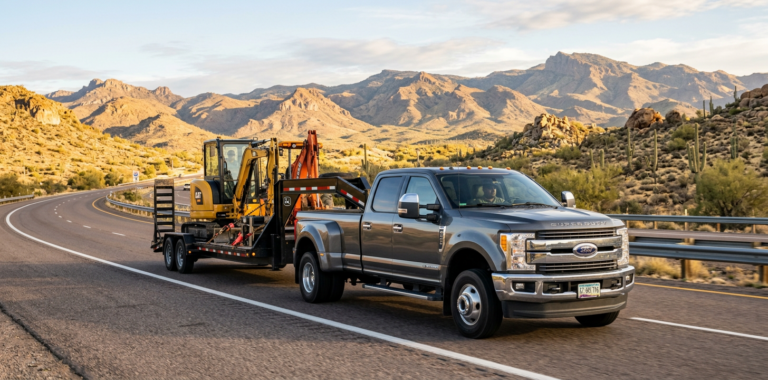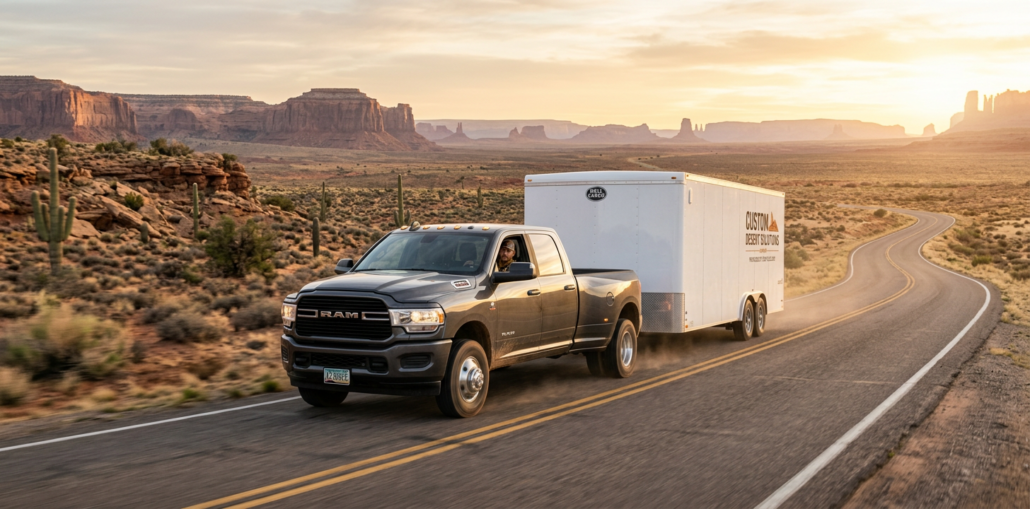
A truck can have an impressive maximum tow rating and still be the wrong setup for your trailer. Truck towing capacity problems usually come from payload, tongue weight, hitch limits, axle ratings, or trailer loading, not simply from the number shown in an advertisement.
We see this often with buyers comparing half-ton, three-quarter-ton, and one-ton pickups for work trailers, campers, equipment, and boats. The answer is not always buying the biggest truck available. It is matching the truck, trailer, hitch, cargo, and real-world use so every weight rating stays within its limit.
The Tow Rating Is Only One Part of the Equation
Your real towing limit is the lowest applicable rating in the entire combination. A truck may have enough advertised capacity to pull a trailer, but its payload, rear axle, receiver hitch, tires, or gross combined weight rating can reduce what it can safely handle when loaded.
| Rating or Limit | What It Includes | Common Problem It Prevents |
|---|---|---|
| Tow rating | Maximum trailer weight | Choosing too heavy a trailer |
| Payload | People, cargo, hitch weight | Overloading the truck itself |
| GVWR | Total loaded truck weight | Exceeding vehicle weight limit |
| GAWR | Weight carried by each axle | Overloading the rear axle |
| GCWR | Truck and trailer together | Exceeding combined weight limit |
| Hitch rating | Trailer and tongue weight | Overstressing the receiver or ball mount |
A published maximum trailer rating is often calculated under a defined set of conditions. Chevrolet’s 2025 Trailering Guide explains that trailer ratings are useful for comparing vehicles, but the specific truck’s passengers, cargo, equipment, and weight ratings can require a lower trailer weight. (chevrolet.com)
For buyers shopping for equipment-hauling or RV duty, we recommend starting with the loaded trailer weight, then working backward to the truck. That avoids choosing a pickup based on a best-case rating that does not match the way you actually travel or work.
Why Payload Causes So Many Towing Capacity Problems
Payload is frequently the first limit a towing setup reaches, especially with travel trailers, goosenecks, and fifth-wheels. Payload must cover passengers, tools, cargo in the bed, aftermarket accessories, the hitch itself, and the downward load transferred from the trailer.
Tongue Weight Counts as Truck Payload
For a conventional bumper-pull trailer, tongue weight is the downward force exerted on the hitch. That weight is carried by the truck, which means it uses payload and affects rear axle loading.
The 2025 Nissan Towing Guide states that conventional trailer tongue load should generally stay between 10% and 15% of actual loaded trailer weight, while remaining within the vehicle’s maximum tongue-load specification. (nissanusa.com)
For example, an 8,000-pound loaded travel trailer may place roughly 800 to 1,200 pounds on the truck before adding a family, a cooler, recovery gear, tools, or a bed-mounted generator. That is why a truck can be below its maximum tow rating while already close to, or beyond, its payload rating.
Fifth-Wheel and Gooseneck Loads Change the Math
Fifth-wheel and gooseneck trailers commonly put more weight into the bed than a bumper-pull trailer places on a receiver hitch. Chevrolet’s guide uses a 15% to 25% kingpin-weight range for these trailer types, and that load must remain within both rear axle and GVWR limits. (chevrolet.com)
A properly configured one-ton single-rear-wheel truck can be a strong match for many trailer owners. If your fully loaded fifth-wheel or commercial gooseneck creates a high pin weight, however, a dual-rear-wheel setup may provide the payload and rear-end stability you need. Browse heavy-duty dually trucks built for serious towing when that is the type of work you expect your next truck to handle.
Warning Signs Your Tow Setup Is Overmatched
A towing problem is not always obvious on the first short trip. The truck may feel acceptable on level streets, then become unsettled once wind, grades, highway speeds, rough pavement, or a fully loaded trailer enter the picture.
Watch for these signs:
- Rear-end squat that leaves the trailer nose-high or lifts the truck’s front end
- Frequent trailer sway, wandering, or repeated steering corrections
- A trailer that feels unstable during braking or downhill travel
- Rear axle, tire, hitch, or payload ratings that are too close to their limits
- Excessive transmission temperature, overheating, or poor uphill performance
- A brake controller that cannot produce smooth, confident trailer braking
- Uneven tire wear or tires that do not have the correct load rating and pressure
These symptoms do not automatically mean the truck needs a lift kit, stiffer springs, or bigger tires. Modifications can affect ride height, driveline angles, handling, and rated capacity. They do not raise manufacturer weight ratings by themselves.
How to Diagnose Truck Towing Capacity Problems
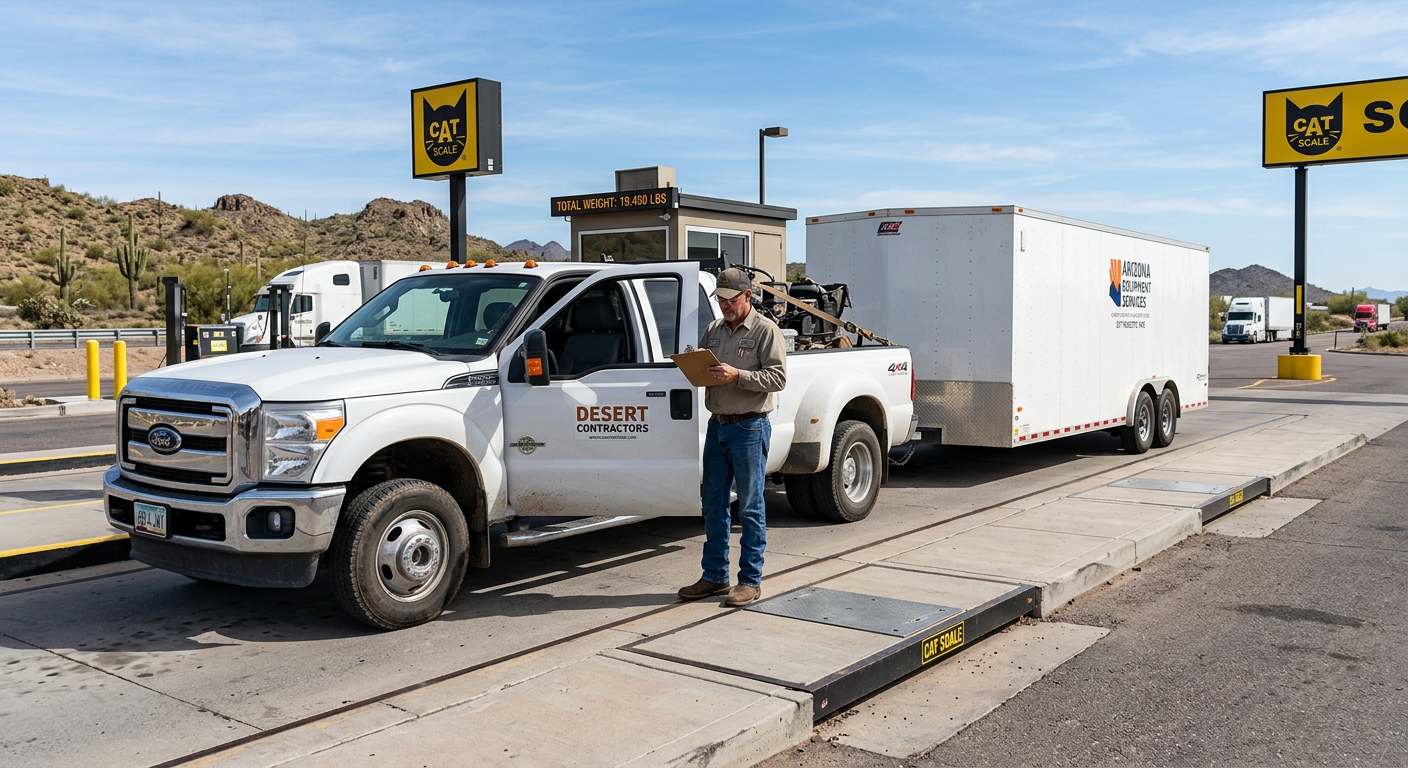
The best way to diagnose a towing issue is to weigh the complete combination in real travel or work condition. Guessing based on dry trailer weight, brochure numbers, or an unloaded truck can hide the rating that matters most.
Use a Public Scale With the Truck Loaded as You Tow
Load the truck with the people, fuel, hitch equipment, tools, and bed cargo you normally carry. Load the trailer with the equipment, water, supplies, or recreational gear you will actually take. Then record weights for the truck alone, the complete combination, and individual axles when possible.
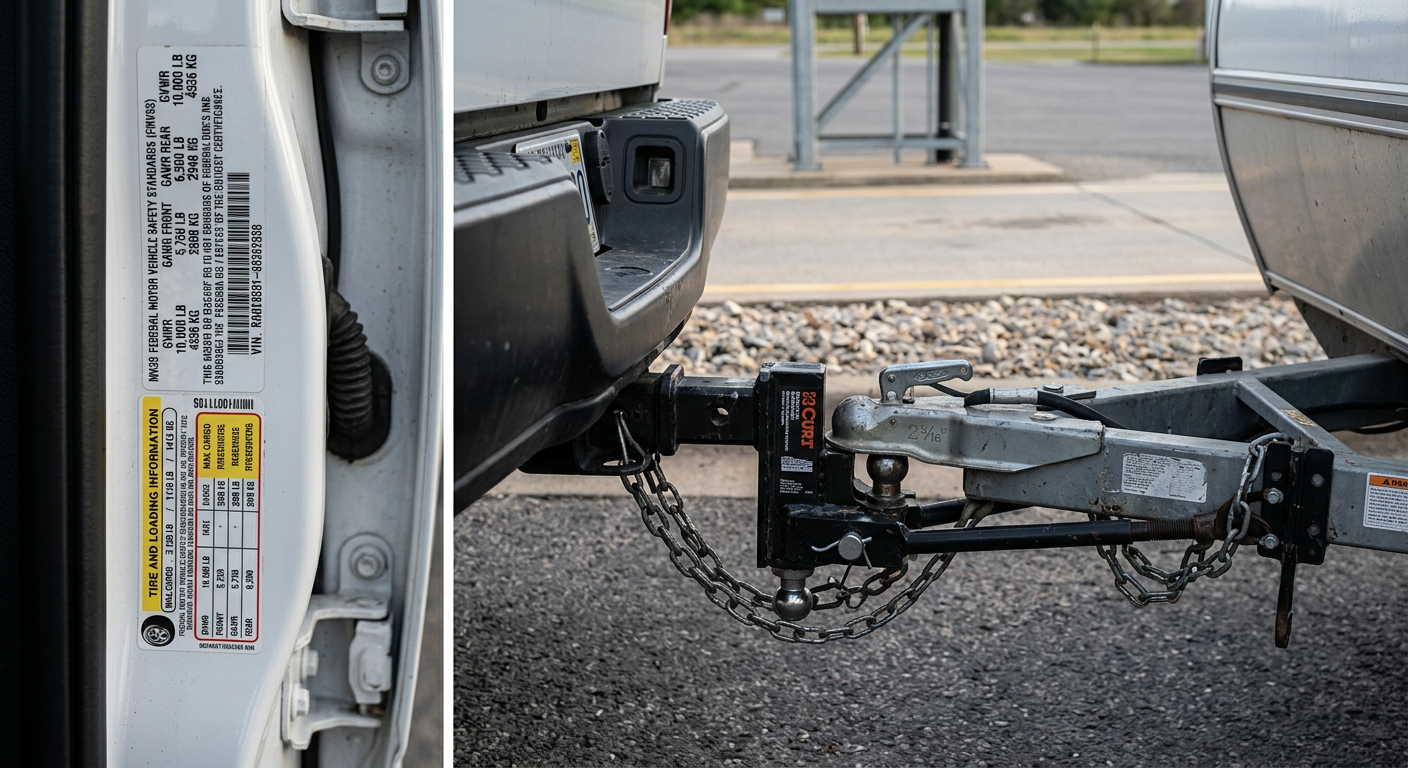
Compare the results with the certification label on the driver-side door area, the owner’s manual, the trailer label, and the hitch manufacturer’s ratings. The Nissan towing guide specifically advises checking GVWR, GAWR, and GCWR rather than relying on trailer weight alone. (nissanusa.com)
Check These Five Numbers Before Every Major Trip
- Actual loaded trailer weight: Include fuel, water, machines, cargo, and supplies.
- Actual tongue or pin weight: Measure it with the trailer loaded and level.
- Truck payload remaining: Subtract passengers, cargo, hitch hardware, and tongue or pin weight from the door-sticker payload figure.
- Front and rear axle weights: Confirm neither axle exceeds its GAWR.
- Combined weight: Confirm the truck and trailer remain under GCWR.
This process is especially valuable for Arizona truck owners who pull through changing conditions, from city traffic in Phoenix to long grades and higher-elevation routes. Heat, elevation, and sustained climbs can expose a marginal setup quickly.
Choosing the Right Truck for the Trailer You Actually Own
The right truck depends on how much you tow, how often you tow, where you tow, and how much weight lands on the truck. A lighter trailer used a few weekends per year calls for a different setup than a loaded equipment trailer used every weekday.
Half-Ton Pickups
A properly equipped half-ton can be a smart choice for lighter boats, utility trailers, side-by-side trailers, and some travel trailers. The biggest concern is often payload, particularly when carrying several passengers and a loaded trailer with substantial tongue weight.
Three-Quarter-Ton Trucks
An F-250, Silverado 2500HD, Sierra 2500HD, or Ram 2500 is often a better match when trailer weights and tongue loads increase. These trucks are commonly considered by buyers pulling larger campers, car haulers, and jobsite equipment, but exact ratings still vary by cab, bed, drivetrain, engine, axle ratio, and factory towing equipment.
One-Ton Single-Rear-Wheel and Dually Trucks
One-ton pickups make sense when payload and pin weight, rather than raw pulling power, become the limiting factors. For frequent fifth-wheel, gooseneck, commercial, or heavy equipment use, compare used diesel trucks for towing and hauling and verify the rating label on the individual truck before making a decision.
Diesel torque and exhaust-braking capability can make a major difference on long grades, but a diesel engine is not a substitute for sufficient payload, hitch capacity, braking equipment, or proper trailer balance.
Equipment Issues That Can Limit a Capable Truck
Even the right truck can have towing trouble when the hardware is mismatched. The receiver, ball mount, ball, coupler, safety chains, brake controller, trailer brakes, tires, and wiring all need ratings that match the loaded combination.
A weight-distribution hitch can improve weight transfer and handling for certain conventional trailers, but it does not increase the truck’s GVWR, GAWR, payload, or receiver limits. The same principle applies to airbags. They may help level the truck, but they do not turn an overloaded setup into a properly rated one.
If a truck is lifted or fitted with larger tires, check hitch height and trailer attitude carefully. The trailer should sit as level as practical, and the ball mount should be selected for the loaded truck and trailer, not for how the truck looks when empty.
Find a Tow-Ready Truck That Fits the Job
A truck that feels confident with a trailer begins with the right ratings, equipment, and configuration. We can help buyers compare trucks for a specific camper, enclosed trailer, horse trailer, equipment trailer, or fifth-wheel, then narrow the options based on real loaded weights instead of a single advertised rating.
Explore work trucks suited to towing and commercial use, or use our Vehicle Finder request if you need a particular cab, bed length, diesel engine, dually configuration, or factory towing package. If financing is part of the plan, you can also get pre-qualified online before you shop.
Common Questions About Truck Towing Limits
Can I tow a trailer that weighs less than my truck’s advertised maximum?
Not automatically. The loaded trailer may be under the advertised tow rating but still exceed your available payload, rear axle rating, hitch tongue-weight rating, or GCWR once passengers and cargo are included.
Does a weight-distribution hitch increase towing capacity?
No. It can improve handling and distribute weight more effectively when used correctly, but it does not raise manufacturer ratings for payload, axle load, GVWR, GCWR, or the hitch receiver.
Why does my truck squat even though I am below its tow rating?
The trailer may have too much tongue weight, the truck may be short on payload, or the load may be placed too far forward. Measure the loaded tongue weight and compare it against the truck’s payload, rear axle, and hitch limits before adding suspension parts.
Is dry trailer weight enough to choose a tow vehicle?
No. Dry weight often excludes water, propane, batteries, accessories, cargo, and personal gear. Use the trailer’s loaded weight or gross vehicle weight rating as part of your planning, then verify it on a scale.
Are lifted trucks good for towing?
They can be, but the lift, tires, suspension components, hitch height, and alignment must be appropriate for towing. A lift kit does not increase factory weight ratings, and an incorrectly angled trailer can create handling and load-distribution issues.
Is a dually always necessary for fifth-wheel towing?
No. The need for a dually depends on actual trailer weight, pin weight, truck payload, axle ratings, and how often you tow. A dually becomes especially worth considering when a fifth-wheel or gooseneck puts substantial weight in the bed or when stability under heavy loads is the priority.
Make the Ratings Work Before You Hit the Road
The fix for truck towing capacity problems is rarely just more horsepower. Start with real loaded weights, respect the truck’s payload and axle limits, confirm every piece of towing equipment is properly rated, and choose a truck with enough margin for the way you use it.
When we match the truck to the trailer instead of chasing one maximum tow number, towing becomes calmer, more controlled, and more predictable. That is better for weekend trips, Arizona job sites, long-distance moves, and every mile in between.
About Unique Trucks
Unique Trucks is a family-owned dealership with over 20 years of experience serving truck buyers in Scottsdale, Phoenix, throughout Arizona, and nationwide. Located at 8701 E McDowell Rd in Scottsdale, AZ, Unique Trucks specializes in quality pre-owned lifted trucks, diesel trucks, custom trucks, heavy-duty pickups, work trucks, and used SUVs.
The Unique Trucks team helps buyers explore financing, trade-ins, vehicle sourcing, and nationwide shipping with a straightforward, no-pressure buying experience.
Browse the current truck inventory, get pre-qualified online, or call (480) 210-2660 to speak with the Unique Trucks team.
YOUR NEXT STEP
Put your research to work.
Explore your options or ask our Scottsdale team about a truck that fits your needs.