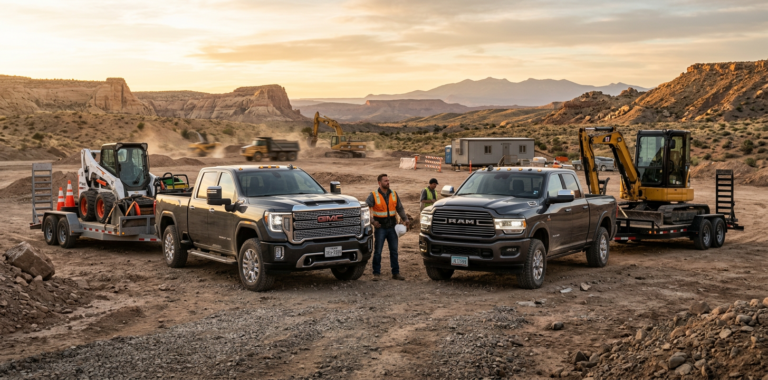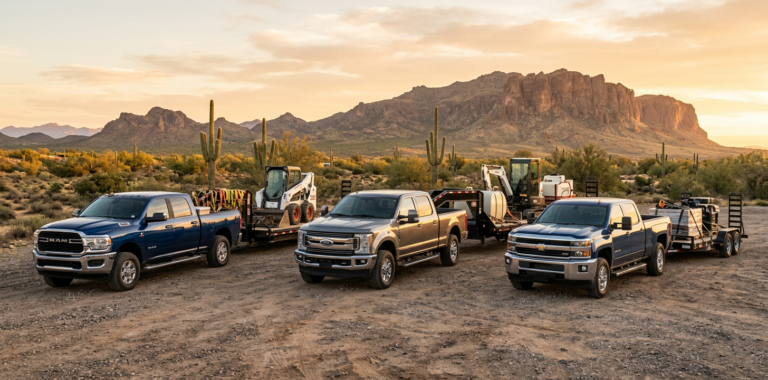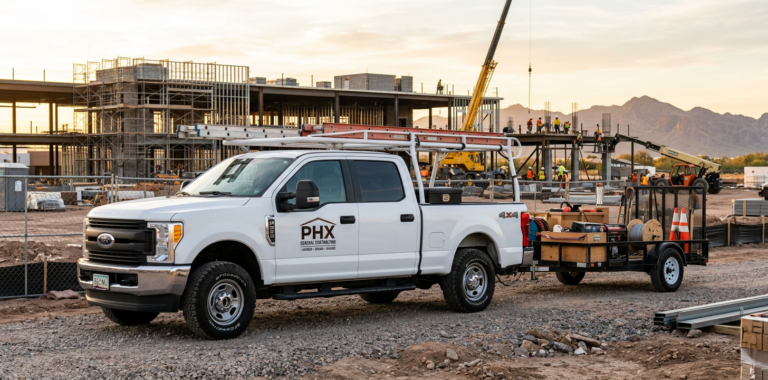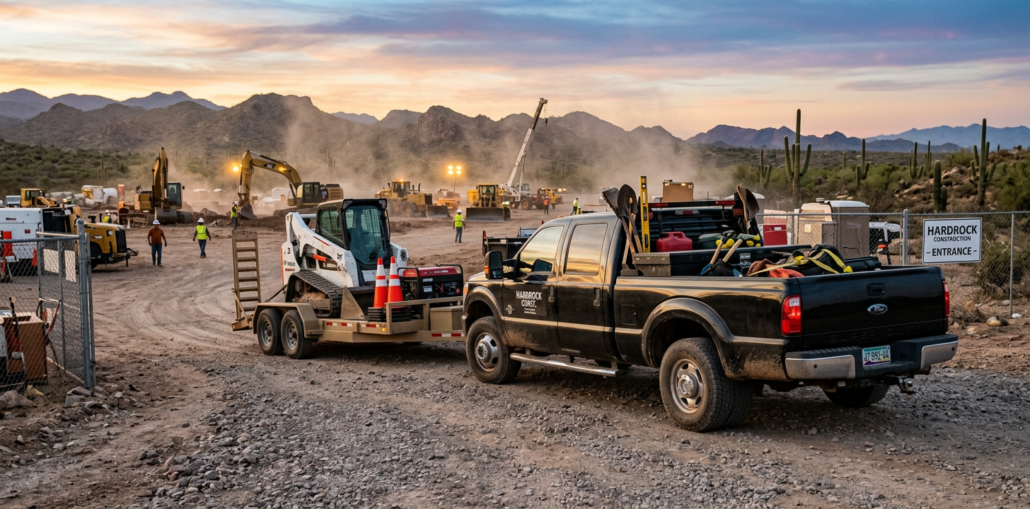
A construction truck has to earn its keep long after the first drive home. It needs to carry people, tools, fuel cans, ladders, and materials, then pull a trailer or reach a rough jobsite without becoming a source of downtime.
The best used work trucks for construction are usually heavy-duty pickups matched to the job, not simply the biggest truck on the lot. For many contractors, a used Ford F-250, F-350, Chevrolet Silverado 2500HD or 3500HD, GMC Sierra HD, or RAM 2500 or 3500 offers the right foundation. The better choice comes down to your normal payload, loaded trailer weight, cab needs, terrain, and operating budget.
A truck also plays a direct role in jobsite safety. The U.S. Bureau of Labor Statistics reported 1,032 fatal work injuries among construction and extraction workers in 2024, while transportation incidents remained the most common fatal event across all occupations. That makes condition, brakes, tires, visibility, trailer equipment, and load planning business decisions, not afterthoughts.
Construction Work Trucks at a Glance
The right truck class depends on the heaviest work you perform regularly. Start with the real weight of your crew, equipment, materials, and trailer, then choose a configuration with enough capability left in reserve.
| Truck Type | Strong Fit For | Main Advantage | Confirm Before Buying |
|---|---|---|---|
| Half-ton pickup | Service calls, light tools | Easier daily driving | Payload after accessories |
| Gas HD truck | Local contractor work | Lower upfront complexity | Trailer and bed load ratings |
| Diesel 2500-series | Frequent equipment towing | Strong low-rpm pulling power | Service and emissions history |
| 3500 or F-350 SRW | Heavy payloads and trailers | Added working margin | Exact door-label payload |
| Dually HD truck | Gooseneck and major pin weight | Rear stability under load | Width, parking, tire costs |
Which Used Trucks Fit Construction Crews Best?
Heavy-duty pickups are usually the most flexible choice for construction because they can combine towing strength, useful bed capacity, available four-wheel drive, and comfortable crew seating. The best model for us is the one that handles the work we do most weeks, not the rare maximum load.
Ford F-250 Super Duty for General Contractors
A used Ford F-250 is often a strong starting point for general contractors, electricians, plumbers, HVAC crews, and remodelers. It is available with gas or Power Stroke diesel power, several cab styles, and bed lengths that make it adaptable for tools, ladders, enclosed trailers, and jobsite travel.
We recommend an F-250 when the truck needs to do several jobs well. A crew cab supports a small team and keeps expensive tools out of the weather. A regular cab or extended cab can make more sense when bed length and maneuverability matter more than rear-seat space.
Ford F-350 for Bigger Loads and Trailer Work
A used F-350 earns consideration when a contractor routinely carries more equipment or tows heavier trailers. Single-rear-wheel models can provide substantial capability while remaining easier to park than a dually. Dual-rear-wheel versions are better suited to consistent gooseneck or fifth-wheel work where rear-axle stability and pin weight are major concerns.
Buyers comparing one-ton Ford trucks can browse lifted Ford F-350 options when an upgraded suspension, larger tires, or off-road stance is genuinely useful for the work environment. Any modified truck still needs to be evaluated carefully for payload, tire ratings, steering feel, alignment, and towing setup.
Chevrolet Silverado HD and GMC Sierra HD for Mixed Duty
Used Silverado HD and Sierra HD pickups are solid choices for businesses that split time between pavement, job sites, and towing. Chevrolet and GMC heavy-duty models are available in 2500HD and 3500HD forms, with gas and Duramax diesel configurations depending on model year and trim.
A 2500HD can fit crews with moderate daily loads and equipment trailers. A 3500HD may be the more sensible long-term answer for contractors who frequently carry heavy bed cargo or work with larger trailers. Do not assume two similar-looking trucks have the same ratings, because cab size, bed length, drivetrain, engine, wheels, and options all affect the truck's usable capacity.
RAM 2500 and 3500 for Trailer-Heavy Operations
RAM heavy-duty trucks are particularly popular with buyers who value diesel torque and regular trailer work. A RAM 2500 can be a practical all-around truck for many small construction operations, while a RAM 3500 is worth considering when heavier trailers, commercial equipment, or a dually configuration are part of the routine.
Cummins-powered trucks can be excellent tools for frequent highway towing, but diesel ownership should be budgeted honestly. Fuel, filters, emissions-related repairs, tires, brakes, and maintenance records matter as much as the engine badge when evaluating a used truck.
Choose the Truck Size Based on the Workday You Actually Have
The best buying decision starts with a written list of weekly tasks. Many construction buyers focus on a model's maximum towing number, but the truck's payload can become the limiting factor first.
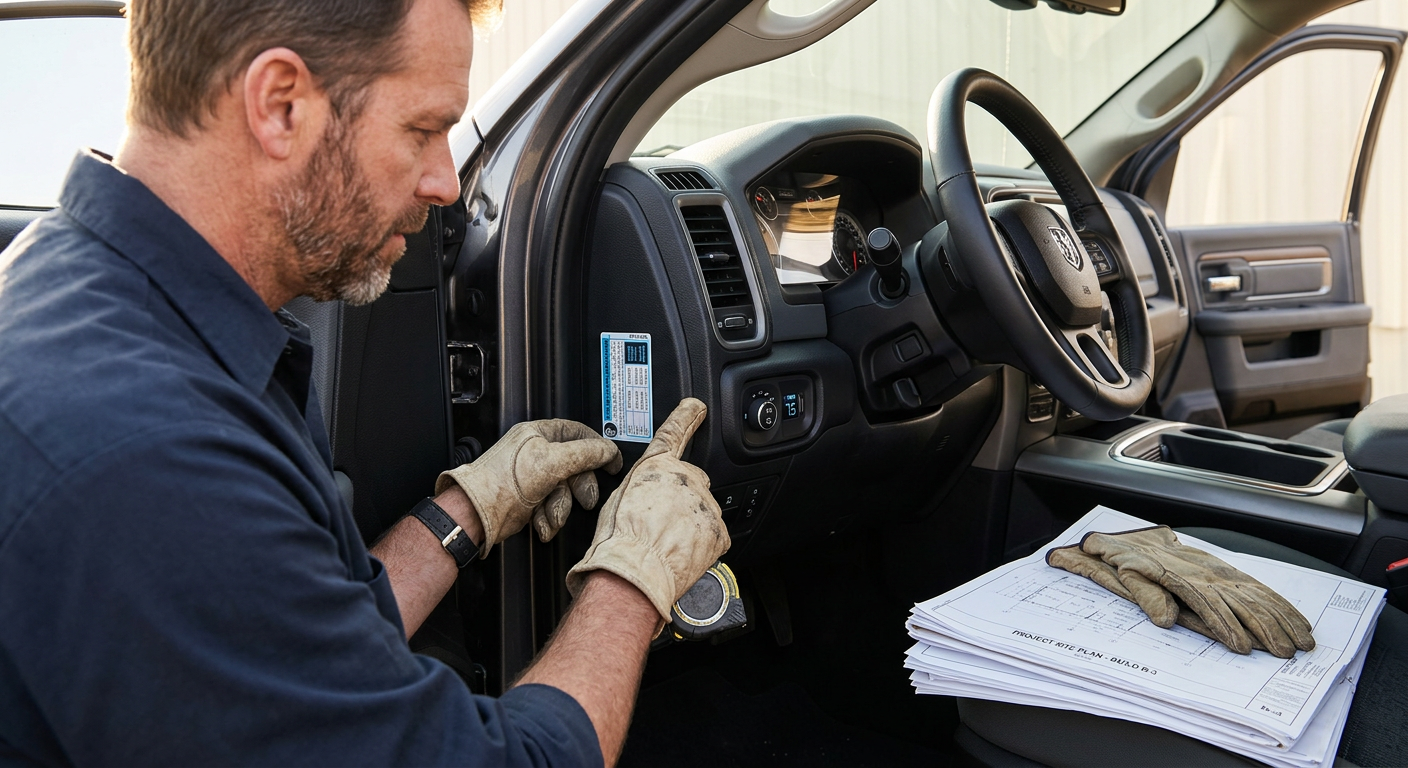
Payload includes everything carried by the truck itself, including driver and passengers, toolboxes, racks, job boxes, materials, fuel tanks, and trailer tongue or pin weight. Towing capacity is the amount a properly equipped truck can pull. They are related, but they are not interchangeable.
Before looking at a specific truck, write down:
- The loaded weight of each trailer you use
- The equipment carried in the bed every day
- The number of passengers and their typical gear
- Whether you use a bumper-pull, gooseneck, or fifth-wheel trailer
- The need for four-wheel drive on dirt, loose gravel, or undeveloped sites
- The space available at jobsites, supply yards, and home parking
The payload sticker on the actual truck matters more than a broad model-line claim. Add your real weight requirements, then leave room for the extra items that always show up during a busy week.
Gas or Diesel: Which Makes More Sense for Construction?
Gas trucks are often the better value for local service work and moderate trailer use, while diesel trucks are usually more compelling for regular heavy towing and long highway miles. Neither is automatically the right answer for every contractor.
When a Gas Heavy-Duty Truck Is the Better Buy
A gas-powered HD pickup can be a smart fit for contractors who make shorter trips, carry tools and materials, pull lighter trailers, or want a lower initial investment. It can also be a simpler choice for a truck that idles often or spends much of its time moving between nearby Phoenix or East Valley jobsites.
Gas HD trucks deserve serious consideration for electricians, painters, landscapers, property maintenance companies, and remodelers. If the truck only pulls a heavy equipment trailer a few times a year, paying more for diesel capability may not improve the business case.
When Diesel Is Worth the Extra Cost
Diesel makes the most sense when towing is frequent, loads are heavy, and the truck spends meaningful time on the highway under strain. Power Stroke, Duramax, and Cummins pickups deliver strong low-end torque that can make equipment trailers feel more controlled, especially on grades and long trips.
For contractors who tow skid steers, compact excavators, dump trailers, enclosed tool trailers, or material trailers every week, it is worth comparing used diesel trucks in Scottsdale. We suggest putting service documentation, engine hours when available, emissions-system condition, tire life, brake condition, and prior towing use near the top of the inspection list.
A Dually Is Not Always the Best Construction Truck
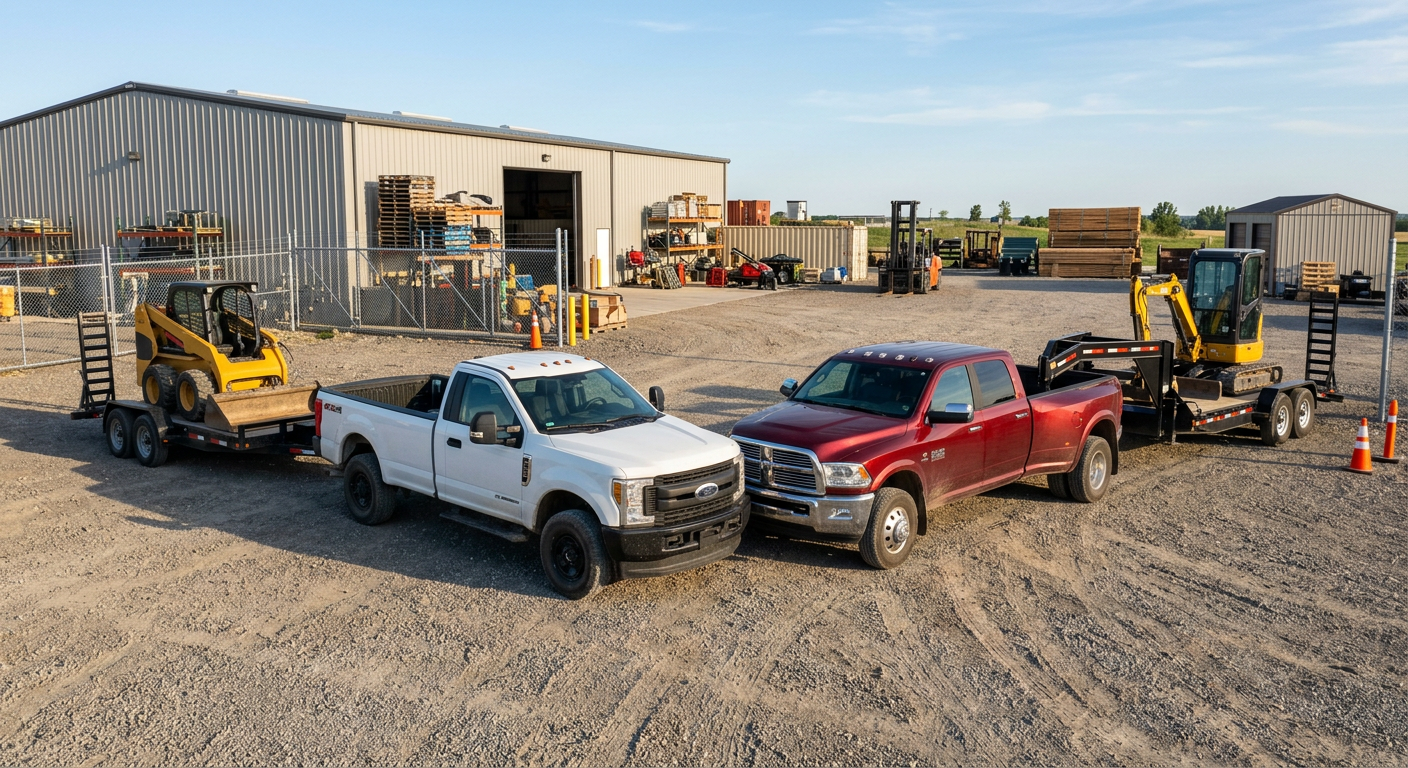
A dually is a smart specialized tool for high pin weights and serious trailer duty, but it is not a blanket upgrade for every business. Its extra rear tires can improve stability under demanding gooseneck or fifth-wheel loads, yet the wider body can make parking, drive-through access, and tight jobsite movement harder.
A single-rear-wheel F-250, F-350, Silverado 2500HD, Sierra 2500HD, or RAM 2500 may be more convenient for contractors whose loads are substantial but not extreme. It is easier to live with day to day and has fewer tires to replace.
If a heavy trailer is central to how we work, a pre-owned dually truck may be the better long-term investment. Confirm the truck's exact ratings, hitch equipment, trailer brake controller, tire specifications, and axle configuration before making a decision.
Inspect a Used Construction Truck Like a Revenue-Producing Asset
A clean exterior is nice, but mechanical condition and evidence of proper care should lead the inspection. A used construction truck has often worked hard, so we should look for proof that it was maintained to match that workload.
Check These Areas Before You Commit
- Service records and vehicle-history information
- Tire age, matching sizes, uneven wear, and sidewall damage
- Braking performance, steering response, suspension condition, and alignment
- Bed floor, tie-downs, tailgate, racks, toolboxes, and signs of overloading
- Hitch receiver, trailer plug, brake controller, mirrors, and trailer-camera equipment
- Fluid leaks, rust, collision repairs, and frame damage
- Diesel maintenance and emissions-system records when applicable
- Added wiring for lights, compressors, inverters, or auxiliary equipment
A test drive should include more than a short loop around the block. We recommend listening for suspension noise, checking cold starts when possible, testing four-wheel drive where appropriate, and making sure the truck tracks straight under braking. If towing is part of the plan, verify that the truck and trailer combination will be properly rated before signing paperwork.
Build a Budget That Accounts for Uptime
The lowest purchase price is not always the least expensive truck to operate. A better budget includes insurance, registration, fuel, maintenance, tires, financing cost, expected upfits, and the potential cost of downtime.
For example, a work-ready truck with a useful cab, bed, hitch setup, and documented maintenance may save more over time than a cheaper truck that needs tires, suspension work, wiring repairs, or a new trailer setup immediately. The goal is a truck that contributes to the job rather than waiting in a repair bay.
A current vehicle can also help fund the upgrade. If we are replacing an older pickup, use the sell or trade your vehicle page to begin evaluating its value. For payment planning, truck financing options can help buyers compare a truck purchase against their business cash flow.
Find a Work Truck That Fits Your Crew and Equipment
A good construction truck should handle the routine job with enough capacity left for unexpected materials, tools, or trailer weight. It should also fit the way the crew works, from seat count and secure storage to bed access and jobsite maneuverability.
At Unique Trucks, we help contractors compare pre-owned pickups based on real working requirements. Browse used work trucks for contractors, or use the Vehicle Finder if you need a particular cab, bed, engine, drivetrain, or towing configuration. Buyers can also get pre-qualified online before narrowing down the right truck.
Common Questions About Used Construction Trucks
Is a half-ton truck enough for a construction business?
A half-ton can work for light service businesses, small tool loads, and occasional light trailers. Contractors who regularly haul materials, carry heavy job boxes, or tow equipment should usually compare heavy-duty options first because payload can be used up quickly.
Is four-wheel drive necessary for a work truck in Arizona?
Four-wheel drive is not necessary for every Arizona contractor, but it can be valuable for loose gravel, dirt access roads, mountain jobs, wet conditions, and travel outside the metro area. A two-wheel-drive truck can still be a good fit for pavement-focused operations with predictable jobsite access.
What bed length is best for construction work?
A long bed provides more space for materials, tool storage, and some trailer setups. A shorter bed is easier to maneuver in neighborhoods and compact sites. The best answer depends on whether hauling materials or carrying a full crew is the higher priority.
Should we buy a crew cab for our construction company?
A crew cab is useful when employees, customers, or secure interior storage travel with the truck often. A regular cab may be better for owners who prioritize a longer bed, lower purchase cost, or a more compact wheelbase.
Can a lifted truck be used for construction work?
It can, provided the suspension, tires, steering, and alignment are properly set up for the intended load. A lift can help with rough access roads, but it may also affect step-in height, handling, payload considerations, and trailer geometry, so it should be evaluated on the individual truck.
How old is too old for a used work truck?
Age matters less than condition, maintenance, mileage, operating history, and the availability of parts and service. An older truck with complete records and sound mechanical condition can be a better buy than a newer truck that has been poorly maintained or overloaded.
The Smart Pick Is the Truck That Works as Hard as You Do
There is no single best badge, engine, or cab style for every construction company. A gas-powered HD pickup may be exactly right for local service work, while a diesel one-ton or dually can be the smarter tool for a contractor towing equipment every day.
We recommend choosing based on the heaviest work that happens regularly, verifying the actual truck's payload and towing setup, and taking condition seriously. That approach gives us a better chance of buying a dependable truck that supports productivity, protects the budget, and keeps the crew moving.
About Unique Trucks
Unique Trucks is a family-owned dealership with over 20 years of experience serving truck buyers in Scottsdale, Phoenix, throughout Arizona, and nationwide. Located at 8701 E McDowell Rd in Scottsdale, AZ, Unique Trucks specializes in quality pre-owned lifted trucks, diesel trucks, custom trucks, heavy-duty pickups, work trucks, and used SUVs.
The Unique Trucks team helps buyers explore financing, trade-ins, vehicle sourcing, and nationwide shipping with a straightforward, no-pressure buying experience.
Browse the current truck inventory, get pre-qualified online, or call (480) 210-2660 to speak with the Unique Trucks team.
YOUR NEXT STEP
Take the next step with Unique Trucks.
Explore your options or ask our Scottsdale team about a truck that fits your needs.