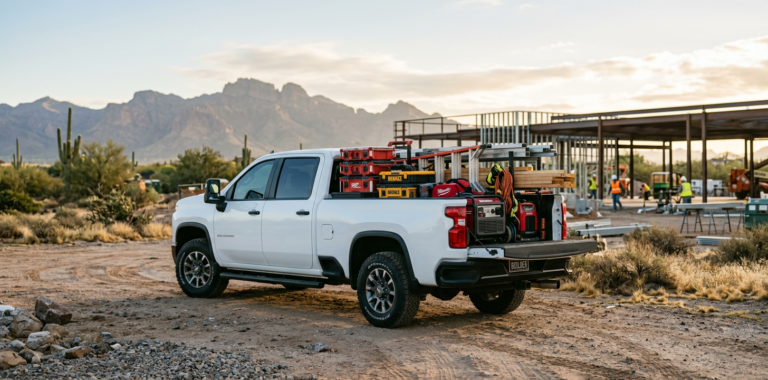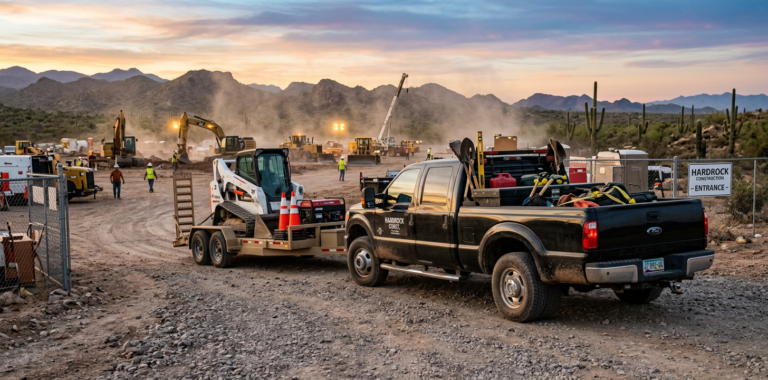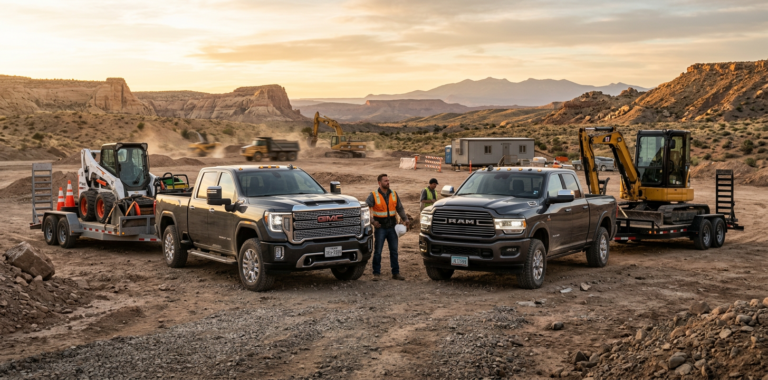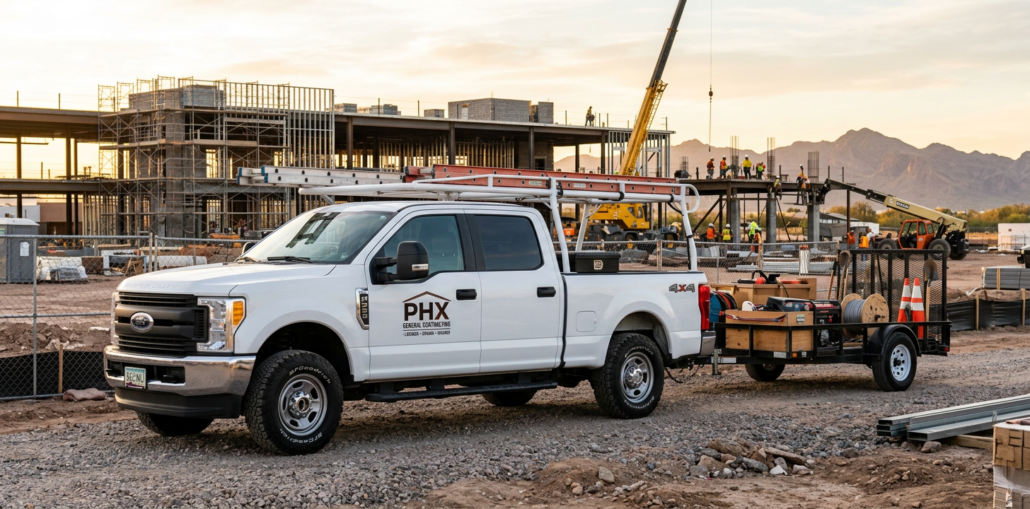
For a Phoenix business, the right truck is not simply transportation. It is part of the crew, part of the schedule, and often part of the first impression customers get when you arrive. The best pre-owned pickup is the one that handles your normal workday safely, keeps operating costs manageable, and leaves room for the business to grow.
When buyers ask us about used work trucks for sale Phoenix, we encourage them to start with the job, not the badge on the grille. A landscape crew hauling enclosed trailers has different needs than an electrician carrying parts and ladders across the Valley. A truck that feels like a bargain but cannot carry the tools, tow the trailer, or fit the crew can cost more through downtime and an early replacement.
The U.S. Bureau of Transportation Statistics reported that 53.8 million pickups averaged 9,500 miles in 2021. For a business-owned truck, those miles can add up much faster, which makes maintenance history, configuration, and condition just as important as model year. Bureau of Transportation Statistics (bts.gov)
Start With the Work Your Truck Will Do Most Often
A used work truck should be sized for its routine workload, not only the occasional oversized job. Write down the cargo, passengers, trailer weight, terrain, daily mileage, and equipment the truck will handle during a normal week before comparing brands or trim levels.
| Daily need | Strong starting point | Why it may fit | What to verify |
|---|---|---|---|
| Service calls and tools | Half-ton or gas HD pickup | Easier to park and operate | Payload label and bed storage |
| Materials and equipment | Three-quarter-ton HD | More chassis and suspension capacity | Actual payload with accessories |
| Frequent trailer towing | Diesel HD pickup | Strong low-end torque for regular loads | Hitch, brake controller, service records |
| Gooseneck or heavy trailers | One-ton or dually | Added rear support and stability | Pin weight, axle ratings, parking needs |
| Crew transport | Crew cab pickup | More usable rear seating | Bed length and total vehicle length |
For many early-stage businesses, the practical sweet spot is a clean, well-equipped three-quarter-ton pickup with enough capacity for regular loads, not an oversized truck that creates higher payments, fuel expense, tire costs, and parking headaches. If your work genuinely calls for a Ford F-350, RAM 3500, Silverado 3500HD, or Sierra 3500HD, buy it for a documented reason such as loaded trailer weight or daily payload.
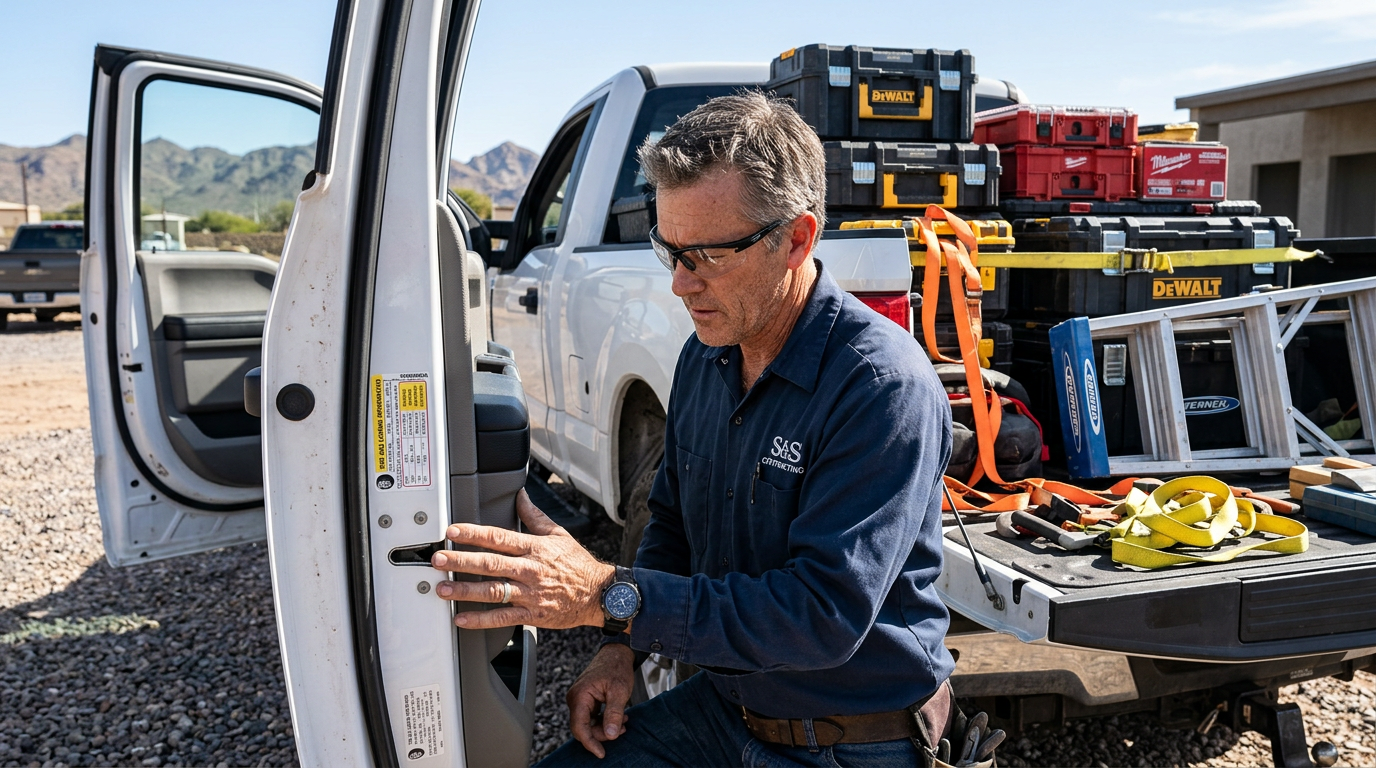
Know the Difference Between Payload and Towing
Payload is the weight carried by the truck itself. Towing is the weight pulled behind it. They work together, but they are not the same rating, and confusing them is one of the most expensive mistakes a work-truck buyer can make.
Payload includes people, tools, racks, toolboxes, cargo, accessories, and trailer tongue or pin weight. A trailer may be within the truck's advertised maximum towing figure while its tongue weight, passengers, and equipment push the truck past its available payload.
Check the Specific Truck, Not a Broad Model Claim
An F-250, Silverado 2500HD, Sierra 2500HD, or RAM 2500 can have very different ratings depending on cab style, bed length, drivetrain, engine, tires, axle ratio, and equipment. The door-jamb labels and manufacturer information for the exact vehicle matter more than a headline number found for the model line.
Before you test drive, bring realistic numbers:
- Loaded trailer weight, not empty trailer weight
- Approximate trailer tongue or pin weight
- Passenger weight for everyone regularly riding in the cab
- Toolboxes, ladder racks, bed covers, generators, compressors, and materials
- Equipment that stays in the truck full time
This approach is especially important for newer companies. A truck that is properly matched to the work can help protect your schedule. A truck that is consistently overloaded can affect handling, braking, tire wear, suspension wear, and long-term reliability.
Choose Gas or Diesel Based on Your Operating Pattern
Gas and diesel work trucks both make sense. The better choice comes down to how hard you work the truck, how far you drive, and how regularly you pull substantial weight.
When a Gas Work Truck Is the Better Business Buy
A gas-powered pickup can be a smart fit for electricians, plumbers, property managers, delivery businesses, landscapers with lighter trailers, and contractors who mostly work around Phoenix. Gas heavy-duty trucks can provide useful capability while generally keeping initial cost and maintenance complexity lower than a comparable diesel.
Gas also deserves a close look if the truck makes frequent short trips, spends time idling, or only pulls heavy equipment a few times each year. Paying for diesel capability that you rarely use can tighten cash flow during the early years of a business.
When Diesel Is Worth the Added Cost
Diesel often earns its place when a truck pulls heavy trailers frequently, runs long highway routes, carries consistent loads, or works in demanding terrain. Power Stroke, Duramax, and Cummins diesel pickups are common choices for equipment trailers, hotshot-style work, larger enclosed trailers, and fifth-wheel or gooseneck applications.
Diesel ownership requires a realistic budget for fuel, maintenance, emissions-related components, insurance, and repairs. We recommend weighing those costs against the value of lower-end torque, confident highway pulling, and the truck's ability to keep working under regular load. Buyers comparing serious tow rigs can review pre-owned diesel truck options in Scottsdale alongside their actual workload.
Build a Work Truck Plan for an Early-Stage Business
For a newer business, the goal is to buy a truck that supports revenue without becoming a financial burden. Start with a one-year operating plan that accounts for the jobs you have now and the work you reasonably expect to add, rather than buying solely for a future that may not arrive on your preferred timeline.
A good first work truck plan answers four questions:
What Does Downtime Cost Us?
If a truck is unavailable for a day, consider missed appointments, crew labor, rental costs, delayed material deliveries, and customer frustration. A lower purchase price is valuable only if the truck's condition and maintenance history support dependable use.
What Can We Afford Beyond the Monthly Payment?
Budget for insurance, registration, fuel, tires, routine maintenance, potential upfitting, and repair reserves. A clean truck with the right bed setup and towing equipment may be more valuable than a higher-trim model with features your business will not use.
Can One Truck Cover More Than One Job?
A crew cab may transport employees and keep expensive tools inside the cab. A long bed may better fit ladders, materials, and jobsite equipment. Four-wheel drive can be valuable for rough access roads, but two-wheel drive can be a sensible choice for businesses that stay on pavement and prioritize simplicity.
What Happens as the Business Grows?
If you expect to add a trailer, crew members, or heavier equipment within the next year, choose a configuration with reasonable room to grow. If you need a specific cab, bed, engine, or towing setup, the Unique Trucks Vehicle Finder can help narrow the options without forcing a compromise on the essentials.
Inspect a Pre-Owned Work Pickup Like a Business Asset
A used work truck can provide excellent value, but it needs a methodical inspection. Condition, maintenance documentation, and evidence of how the truck was used matter more than a shiny exterior alone.
Review the High-Impact Areas
Ask to review available history and inspect these areas closely:
- Tire condition, matching sizes, and uneven wear
- Brakes, steering feel, suspension components, and alignment
- Bed floor, tailgate, tie-downs, hitch receiver, and trailer wiring
- Evidence of leaks, corrosion, collision repairs, or poor-quality modifications
- Air conditioning performance, cameras, power accessories, and lighting
- Service documentation for diesel emissions equipment, if equipped
- Aftermarket wiring for auxiliary lights, compressors, toolboxes, or accessories
A lifted truck can be useful for certain rough-road applications, but any suspension modification should be evaluated against your payload and towing needs. Ask how the lift was installed, whether the truck aligns and drives correctly, and whether tire size and gearing work for the intended job.
Compare Ford, Chevrolet, GMC, and RAM by Configuration
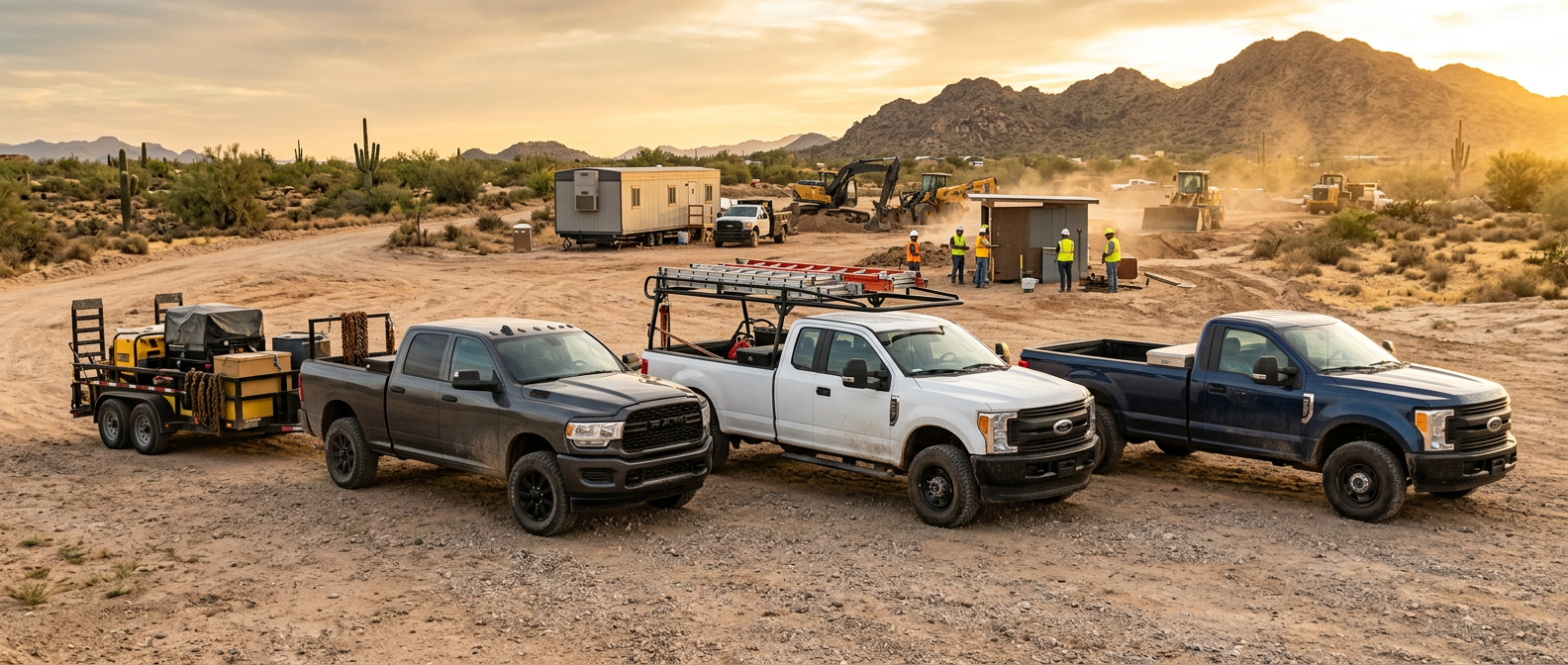
Brand loyalty is common in truck ownership, but a buyer should compare the exact truck configuration before choosing a nameplate. Ford Super Duty, Chevrolet Silverado HD, GMC Sierra HD, and RAM Heavy Duty models can all be capable business tools when properly equipped and maintained.
Ford Super Duty trucks are popular with buyers who need broad configuration choices, including F-250, F-350, F-450, long-bed, crew-cab, and diesel options. Chevrolet Silverado HD and GMC Sierra HD trucks appeal to buyers who want familiar controls, strong heavy-duty capability, and a range of gas and Duramax diesel choices. RAM Heavy Duty trucks are frequently considered by buyers who value Cummins diesel power and a comfortable ride.
The right choice depends on the truck in front of you. Compare service history, bed and cab setup, payload label, drivetrain, available towing equipment, tire condition, and total ownership budget. You can browse work-ready pickups near Phoenix by the features that matter most to your operation.
Make the Test Drive Job-Focused
A quick drive around the block does not tell you enough about a work vehicle. Use the test drive to evaluate the controls, visibility, ride, braking, steering, cabin storage, and comfort that will affect your team through long days.
Check the trailer brake controller, tow mirrors, backup camera, air conditioning, power outlets, and every feature that will matter on a jobsite. Sit in all of the seats your crew will use. If the truck will tow regularly, verify that its hitch, wiring, receiver, and ratings match the trailer before making a commitment.
Take the Next Step Toward the Right Truck
A properly matched pickup can help a Phoenix business carry more, tow with confidence, and arrive ready for the next job. Browse current work truck inventory, then use our online pre-qualification form to explore financing before you visit.
If you are replacing an existing vehicle, you can also value your truck for a sale or trade. The Unique Trucks team can help you compare cab, bed, engine, and towing configurations that fit the work you actually do.
Choose for Uptime, Not Just Appearance
The strongest used work truck purchase is a practical one. Buy for the payload, towing, crew, cargo, and mileage your business handles week after week, then inspect the vehicle carefully and budget for ownership beyond the payment.
A clean half-ton may be the right choice for lighter service work. A gas heavy-duty pickup may offer the best balance for a growing contractor. A diesel one-ton may be worth the investment when heavy trailers are a regular part of the schedule. The important part is matching the truck to the business, not stretching the business to justify the truck.
Frequently Asked Questions
Is a used work truck a good choice for a new Phoenix business?
Yes, a well-maintained pre-owned truck can be a strong choice when it fits your actual workload and leaves room in the budget for insurance, fuel, maintenance, and equipment. Focus on condition, history, and configuration rather than chasing the newest possible model year.
Should we buy a regular cab, extended cab, or crew cab?
Choose a regular cab if bed length, maneuverability, and lower cost matter most. An extended cab works for occasional passengers, while a crew cab is usually the better fit for businesses that carry employees, customers, or secure gear inside the cab.
Do we need four-wheel drive for Phoenix work?
Not always. Two-wheel drive can work well for pavement-based service routes and may lower weight and complexity, while four-wheel drive can be worthwhile for dirt access roads, remote jobsites, mountain travel, or muddy conditions.
What mileage is too high for a used work truck?
There is no single mileage cutoff. A truck with higher mileage and complete maintenance records may be a better purchase than a lower-mile truck with signs of neglected service, hard use, or poor repairs.
Can we finance a used work truck for business use?
Yes, financing may be available for qualified buyers. Approval, terms, and down payment can depend on credit, income, vehicle age, mileage, trade equity, and the overall loan structure, so it helps to review the full cost instead of focusing only on the payment.
About Unique Trucks
Unique Trucks is a family-owned dealership with over 20 years of experience serving truck buyers in Scottsdale, Phoenix, throughout Arizona, and nationwide. Located at 8701 E McDowell Rd in Scottsdale, AZ, Unique Trucks specializes in quality pre-owned lifted trucks, diesel trucks, custom trucks, heavy-duty pickups, work trucks, and used SUVs.
The Unique Trucks team helps buyers explore financing, trade-ins, vehicle sourcing, and nationwide shipping with a straightforward, no-pressure buying experience.
Browse the current truck inventory, get pre-qualified online, or call (480) 210-2660 to speak with the Unique Trucks team.
YOUR NEXT STEP
Take the next step with Unique Trucks.
Explore your options or ask our Scottsdale team about a truck that fits your needs.